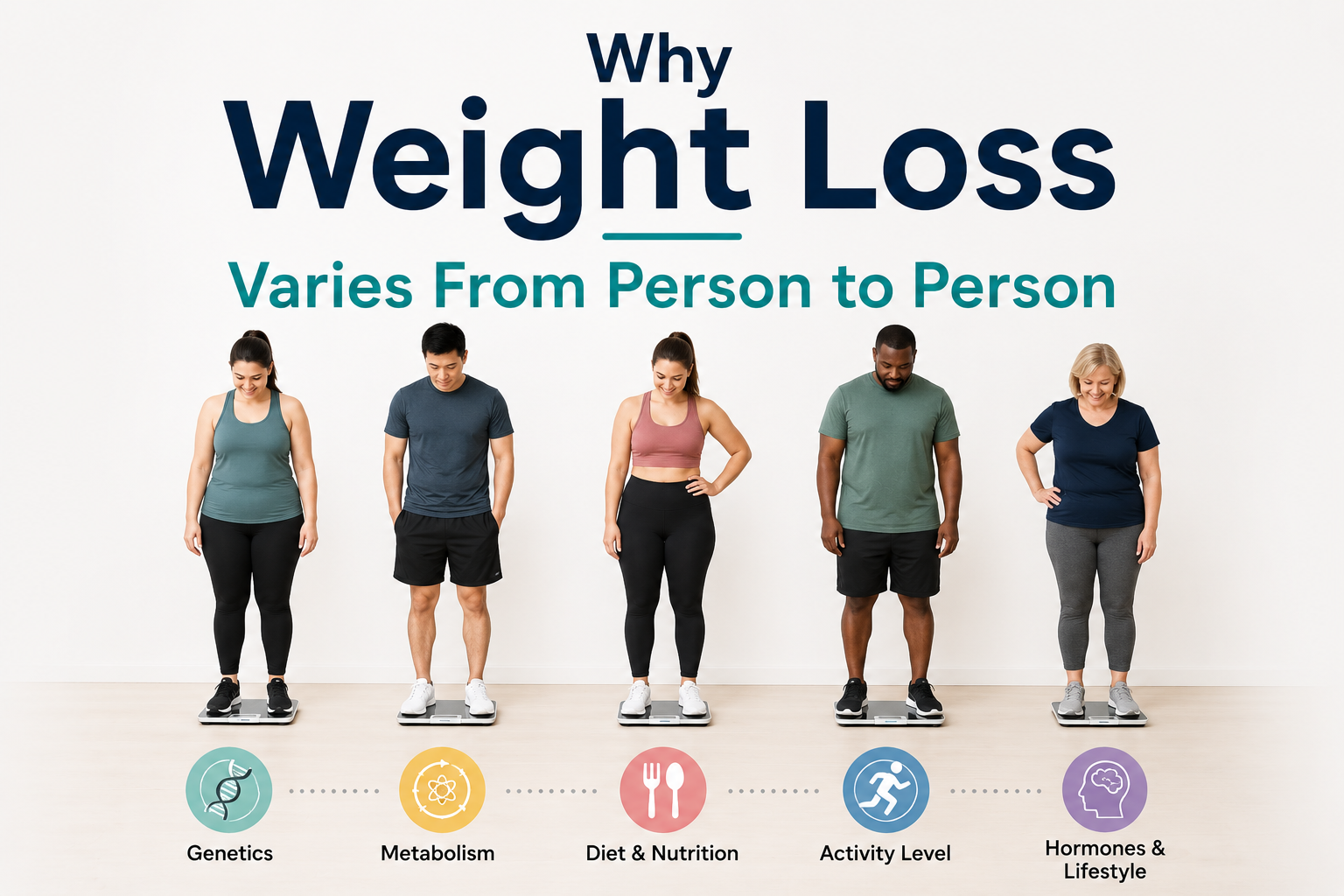
Starting a new diet or fitness routine only to see slower results than a friend following the same plan is a frustratingly common experience. The truth is, weight loss varies from person to person—and the reasons go far deeper than willpower or effort.
Genetics, age, hormones, sleep, and stress all shape how the body responds to diet and exercise. Understanding these factors helps explain why two people can follow identical plans and see vastly different outcomes. More importantly, it shifts the focus away from comparison and toward building a strategy that actually fits the individual.
For Phoenix residents who have hit a wall despite consistent effort, medically supervised weight loss programs offer a more targeted path forward.
Genetics Play a Significant Role in Weight Loss
How Your DNA Influences Metabolism
Genetics influence how efficiently the body burns calories, stores fat, and converts food into energy. Some people are genetically predisposed to a faster metabolic rate, meaning they burn more calories at rest than others of a similar size. Others carry genetic variants that promote fat storage or reduce the body’s ability to respond to exercise.
These differences help explain why some individuals drop weight quickly on a modest calorie deficit, while others struggle to see movement on the scale despite significant effort.
Family History and Weight Management
Hereditary tendencies toward obesity are well-documented. Inherited metabolic traits—such as how the body regulates hunger hormones or processes certain macronutrients—can create built-in challenges for some individuals. Recognizing this isn’t about resignation; it’s about understanding the starting point and adjusting expectations accordingly.
Age and Gender Affect Weight Loss Results
Why Weight Loss Becomes More Challenging With Age
Metabolism naturally slows with age. After the age of 30, the body gradually loses lean muscle mass—a process called sarcopenia—which reduces the number of calories burned at rest. Hormonal shifts, particularly during menopause and andropause, further complicate the picture by influencing fat distribution and energy regulation.
For older adults, the same calorie restriction that worked at 25 may produce far fewer results at 50.
Differences Between Men and Women
Men typically carry more lean muscle mass than women, which gives them a higher basal metabolic rate. This is one reason men often lose weight faster in the early stages of a shared diet or exercise program. Women, by contrast, tend to store more body fat due to hormonal differences—particularly estrogen—which plays a protective role in reproductive health but can also make fat loss more resistant.
Metabolic Health Can Influence Progress
Understanding Metabolic Rate
Basal metabolic rate (BMR) refers to the number of calories the body needs to maintain basic functions at rest. BMR varies significantly between individuals based on body composition, age, genetics, and health status. Two people of the same height and weight can have meaningfully different BMRs, which directly affects how quickly they lose weight on a calorie-reduced diet.
Medical Conditions That Impact Weight Loss
Several underlying medical conditions can make weight loss significantly more difficult:
- Insulin resistance impairs the body’s ability to regulate blood sugar, often leading to increased fat storage.
- Thyroid disorders, particularly hypothyroidism, slow metabolism and can cause unexplained weight gain.
- Polycystic Ovary Syndrome (PCOS) affects hormone regulation in women, contributing to weight gain and difficulty losing fat.
These conditions are often undiagnosed. Professional evaluation is an important step for anyone who has struggled to lose weight despite genuine dietary and lifestyle changes.
Lifestyle Habits Matter More Than Many Realize
Sleep and Weight Management
Sleep is one of the most underestimated factors in weight management. Poor sleep disrupts the balance of ghrelin and leptin—the hormones that regulate hunger and fullness. When sleep-deprived, the body produces more ghrelin (which increases appetite) and less leptin (which signals satiety), making overeating far more likely. Chronic sleep deprivation has been associated with both weight gain and difficulty losing weight.
Stress Levels and Weight Loss
Elevated cortisol—the body’s primary stress hormone—promotes fat storage, particularly around the abdomen. Chronic stress also drives emotional eating behaviors, where food becomes a coping mechanism rather than fuel. Managing stress through sleep, exercise, mindfulness, or professional support can have a measurable impact on weight loss outcomes.
Daily Activity Beyond Exercise
Formal exercise matters, but it accounts for a smaller portion of total daily calorie burn than most people assume. Non-exercise activity thermogenesis (NEAT)—the energy expended through walking, standing, fidgeting, and other incidental movement—varies enormously between individuals. Sedentary desk workers may burn hundreds fewer calories per day than those in physically active roles, even if both complete the same workout.
Nutrition Needs Are Not One-Size-Fits-All
Individual Responses to Different Diets
There is no single diet that works for everyone. Some individuals respond well to low-carbohydrate approaches, while others perform better with higher carbohydrate intake. Variations in gut microbiome composition, insulin sensitivity, and food tolerances all influence how the body responds to different eating plans.
Calorie Quality Versus Quantity
Calorie counting is a useful tool, but food quality matters alongside quantity. Nutrient-dense foods—those rich in fiber, protein, and micronutrients—tend to support satiety, muscle retention, and metabolic health more effectively than calorie-equivalent processed alternatives. Long-term adherence is ultimately the strongest predictor of success; the best diet is the one a person can realistically sustain.
Hormones Can Create Unique Weight Loss Challenges
Hormonal Imbalances and Their Effects
Hormones regulate nearly every aspect of metabolism and fat storage. Imbalances in insulin, cortisol, estrogen, and testosterone can each create distinct barriers to weight loss:
- Insulin drives fat storage when chronically elevated.
- Cortisol promotes abdominal fat accumulation under stress.
- Estrogen imbalances affect fat distribution, particularly in women.
- Low testosterone in men is associated with reduced muscle mass and increased body fat.
Why Professional Monitoring May Help
Identifying hormonal imbalances requires targeted testing that goes beyond a standard check-up. Working with a healthcare provider to uncover underlying hormonal issues allows for customized treatment plans—whether through lifestyle intervention, medication, or a combination of both—that address the actual root cause rather than symptoms alone.
The Importance of Personalized Weight Loss Approaches
Why Generic Programs Often Fail
One-size-fits-all programs overlook the biological and lifestyle variability that makes each person’s weight loss journey unique. Fad diets and quick-fix solutions may produce short-term results, but they rarely account for metabolic health, hormonal status, or individual food tolerances. Without personalization, these approaches tend to fail—not because the individual lacked discipline, but because the program wasn’t designed for them.
Benefits of Customized Medical Weight Loss Programs
Medically supervised weight loss programs offer a fundamentally different approach. They typically begin with a comprehensive individual assessment—reviewing metabolic health, hormones, medical history, and lifestyle factors. From there, a goal-oriented plan is developed and adjusted over time with professional monitoring and support. This level of customization dramatically improves both outcomes and long-term adherence.
How Phoenix Residents Can Find the Right Weight Loss Solution
When to Seek Professional Guidance
There are clear signals that it may be time to consult a professional: weight that has plateaued despite consistent dietary and exercise changes, suspected hormonal or metabolic issues, or simply the need for structured accountability and expert oversight. These aren’t signs of failure—they’re signs that a more targeted approach is needed.
Exploring Medical Weight Loss Options in Phoenix
Phoenix residents have access to a growing number of medically supervised weight loss programs. When evaluating options, it’s worth prioritizing evidence-based programs led by experienced healthcare professionals who conduct thorough assessments and tailor plans to each individual’s needs. A program that treats weight loss as a medical issue—not a motivational one—is far more likely to deliver lasting results.
Every Body Is Different—And That’s the Point
Weight loss varies from person to person because no two individuals share the same genetics, metabolism, hormones, lifestyle habits, or health conditions. Comparing progress to someone else’s is not only discouraging—it’s scientifically unsound.
The most effective weight loss strategies are those built around the individual: their biology, their circumstances, and their goals. For Phoenix residents who have struggled to see results through traditional methods, working with a qualified medical weight loss professional can provide the personalized support needed to finally move forward.

 Welcome to CreativeGeneralist.com, your premier destination for authentic news, captivating stories, and insightful posts curated from across the globe. We meticulously select diverse content to inform, entertain, and inspire.