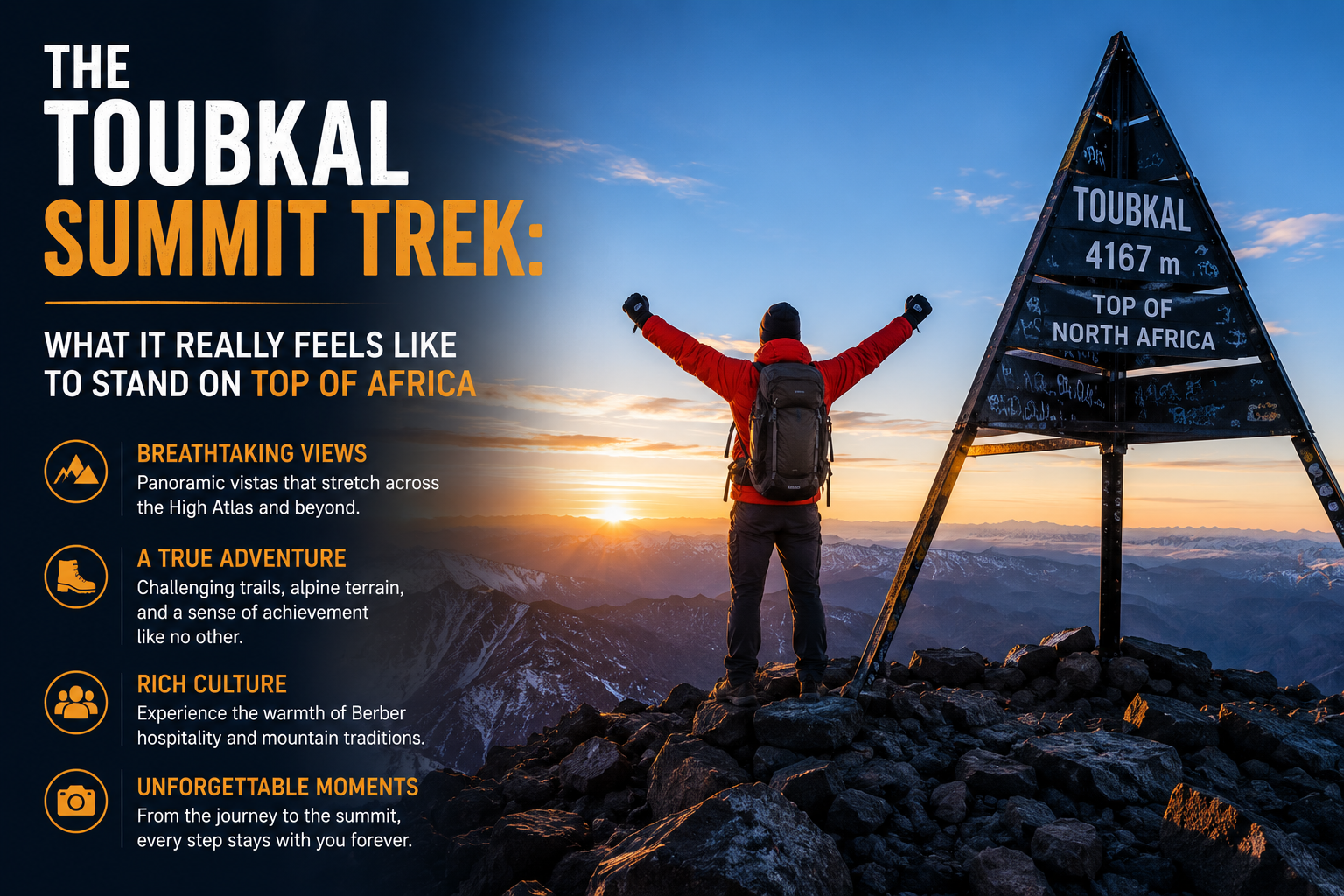
There is a moment on the Toubkal summit trek that nobody quite warns you about. It is not the altitude, though you will definitely feel that. It is not the scree on the upper mountain, though your legs will remember it the next morning. It is the moment you step onto the summit at 4,167 metres, catch your breath, and realise that every direction you look, the world simply falls away beneath you. That moment is worth everything that came before it.
The Mount Toubkal trek has been drawing hikers to Morocco for decades, and it is not hard to understand why. It is the highest peak in North Africa, it is accessible without technical climbing equipment, and it sits in a region so culturally rich that the journey to the top is just as rewarding as the summit itself. Whether you are an experienced hiker looking for your next challenge or someone who simply wants to push themselves somewhere beautiful, Toubkal delivers.
What the Mountain Actually Looks Like
People sometimes picture Morocco and think of the desert. Toubkal is something else entirely. The High Atlas mountains are rugged, dramatic, and in the cooler months genuinely snow-covered. The trail from Imlil rises through a valley that feels almost Alpine in character, with fast-moving streams, terraced fields, and stone villages clinging to the hillsides. As you climb higher, the vegetation thins out and the landscape becomes more raw and elemental. By the time you reach the upper mountain, you are moving through a world of rock and sky and very little else.
That contrast is part of what makes the Mount Toubkal trek so memorable. You start in a living, breathing Berber village and end the day sleeping in a refuge at over 3,000 metres with nothing but peaks around you. It is a genuine transition, and you feel every metre of it.
The Summit Day
The Toubkal summit trek builds to one defining moment, and that moment comes early. Most groups leave the refuge before sunrise, headtorches on, the cold sharp and immediate. The pre-dawn start is not just tradition. It is practical. Getting to the summit before the midday heat and potential afternoon cloud gives you the clearest views and the safest conditions for the descent.
The upper section of the climb is steep and loose underfoot. You will find a rhythm with the scree, taking it one steady step at a time, pausing to breathe and look back at how far you have already come. Your guide will set the pace, reading the mountain and the group in a way that only comes from years of experience on the same trail.
And then you are there. The summit marker, the panoramic views, the quiet satisfaction of having actually done it. On a clear morning you can see the Sahara to the south, distant ranges in every direction, and a sky so blue it almost does not look real. Most people spend longer up there than they planned because leaving feels like giving something up.
Getting Back Down
The descent is longer than most people expect. Coming down through the Toubkal Valley to Imlil takes several hours, and by the time you arrive your legs will have a very clear opinion about stairs for the next few days. That tiredness is part of the experience. It is the physical proof of what you did.
Why Going with a Local Guide Changes Everything
The Mount Toubkal trek is technically achievable without a guide, but going with someone who knows the mountain personally transforms the experience. Omar Ait Zine grew up in a Berber village in the shadow of these peaks. He has been leading the Toubkal summit trek since 2010, certified by the Royal Moroccan Federation, and he brings something to the trail that no map or GPS ever could. He knows which paths to take when the weather shifts, where to stop for the best views, and how to make a group of strangers feel like they belong up there together.
His team at Atlas Mountains Hike handles everything from transport out of Marrakech to meals on the mountain, so you can focus entirely on the experience in front of you.
The Mount Toubkal trek starts from £110. Book your dates at atlasmountainshike.com.

 Welcome to CreativeGeneralist.com, your premier destination for authentic news, captivating stories, and insightful posts curated from across the globe. We meticulously select diverse content to inform, entertain, and inspire.