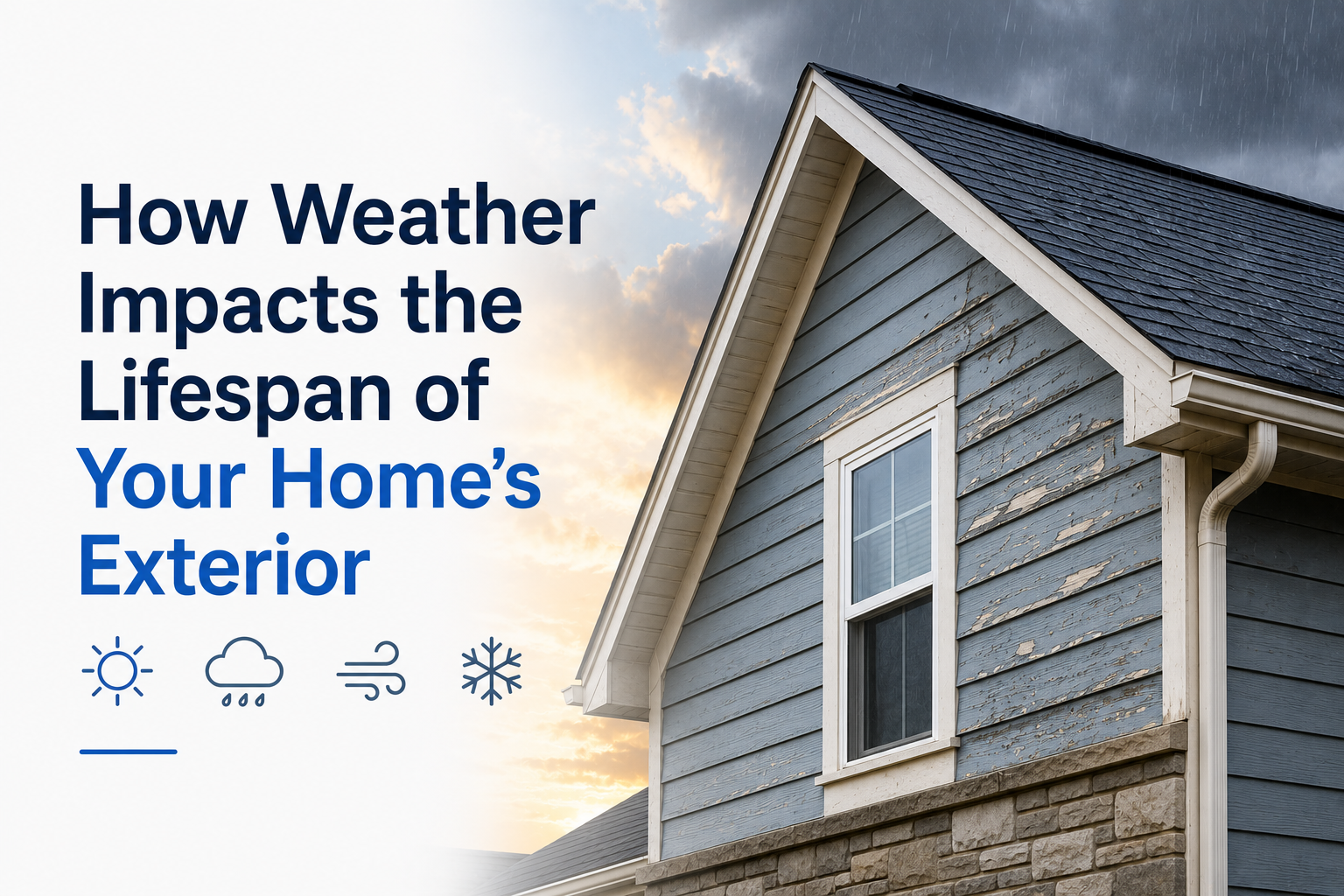
Every home is exposed to the elements year-round, but many homeowners underestimate how significantly weather conditions affect the longevity of exterior building materials. From intense summer heat to heavy rain, strong winds, and seasonal temperature swings, environmental factors play a major role in determining how long a roof, siding, gutters, and other exterior components will last.
Understanding these impacts can help homeowners make smarter maintenance decisions, avoid costly repairs, and maximize the lifespan of their property’s exterior systems.
The Constant Stress of Environmental Exposure
Unlike interior components, exterior surfaces are subjected to continuous wear from nature. Roofing materials absorb sunlight, siding expands and contracts with temperature changes, and gutters handle thousands of gallons of water throughout the year.
While modern building materials are designed for durability, no exterior system is immune to aging. The rate at which materials deteriorate often depends on local climate conditions and how well the property is maintained over time.
Homeowners who understand the relationship between weather and exterior performance are often better equipped to identify issues before they become serious problems.
How Sunlight Affects Roofing and Siding
Sun exposure is one of the most overlooked causes of exterior deterioration. Ultraviolet (UV) rays continuously break down materials at the molecular level, gradually reducing their effectiveness.
Roofing Materials
Over time, prolonged UV exposure can cause roofing materials to:
- Become brittle
- Lose protective granules
- Develop cracks
- Experience color fading
- Lose flexibility
As these changes occur, the roof becomes more vulnerable to leaks and storm damage.
Exterior Siding
Siding materials also experience wear from sunlight. Fading, warping, and surface degradation can occur, particularly on areas that receive direct sun throughout the day.
Regular inspections can help identify early signs of weather-related wear before they affect the home’s structural integrity.
The Hidden Damage Caused by Moisture
Water is one of the most destructive forces affecting residential properties. While roofs and siding are designed to repel moisture, even small vulnerabilities can allow water to penetrate exterior systems.
Common moisture-related issues include:
Wood Rot
When water remains trapped in wooden components, decay can develop. Over time, this weakens structural elements and creates costly repair needs.
Mold and Mildew Growth
Persistent moisture can create conditions that encourage mold and mildew. These issues often begin in concealed spaces where leaks go unnoticed.
Insulation Damage
Water infiltration may reduce insulation effectiveness, leading to higher energy costs and decreased indoor comfort.
Because moisture damage often develops slowly, preventative maintenance is typically far less expensive than major restoration work.
Wind and Storm Events Accelerate Wear
Severe weather events can significantly shorten the lifespan of exterior materials. High winds, hail, and flying debris frequently cause damage that is not immediately visible from the ground.
After major storms, homeowners should evaluate:
- Roofing materials for displacement
- Gutters for dents or separation
- Siding for cracks and impact damage
- Flashing around roof penetrations
- Tree-related damage near the structure
Many small storm-related issues become larger concerns months later if they are not addressed promptly.
Seasonal Temperature Changes and Material Expansion
One of the less obvious challenges facing exterior systems is thermal expansion and contraction.
As temperatures rise, materials expand. When temperatures fall, they contract. This cycle repeats continuously throughout the year.
Over time, these movements can contribute to:
- Sealant failures
- Cracking around joints
- Fastener loosening
- Material fatigue
- Water intrusion points
Properties located in regions with significant seasonal temperature variations are especially susceptible to these stresses.
Routine inspections can identify vulnerable areas before weather cycles cause more extensive deterioration.
Why Preventative Maintenance Makes a Difference
Weather-related wear is unavoidable, but its impact can be significantly reduced through proactive maintenance.
A preventative approach offers several advantages:
Early Detection
Minor issues are easier and less expensive to repair than major failures.
Better Long-Term Performance
Well-maintained exterior systems often achieve or exceed their expected lifespan.
Improved Energy Efficiency
Exterior components in good condition help maintain indoor temperatures more effectively.
Reduced Emergency Repairs
Unexpected leaks and storm damage can be disruptive and costly. Routine inspections help minimize surprises.
Homeowners seeking additional information about exterior maintenance best practices may find insights from the Ideal Roofing and Exteriors experts useful when evaluating long-term property protection strategies.
Building a Weather-Resistant Home
Protecting a home’s exterior requires a combination of quality materials, proper installation, and consistent maintenance. While no property can completely avoid weather-related wear, homeowners can substantially reduce risks through regular care.
A simple annual maintenance checklist can include:
- Roof inspections
- Gutter cleaning
- Siding evaluations
- Caulking and sealant reviews
- Drainage assessments
- Storm damage checks
These small efforts can help identify vulnerabilities before they become expensive problems.
Conclusion
Weather affects every aspect of a home’s exterior. Sun exposure, moisture, wind, and seasonal temperature fluctuations all contribute to gradual wear and deterioration. While these forces cannot be controlled, homeowners can take practical steps to manage their impact.
Regular inspections, preventative maintenance, and timely repairs help extend the lifespan of roofing, siding, gutters, and other critical exterior components. By understanding how weather influences exterior performance, homeowners can make informed decisions that protect both their investment and their peace of mind for years to come.

 Welcome to CreativeGeneralist.com, your premier destination for authentic news, captivating stories, and insightful posts curated from across the globe. We meticulously select diverse content to inform, entertain, and inspire.