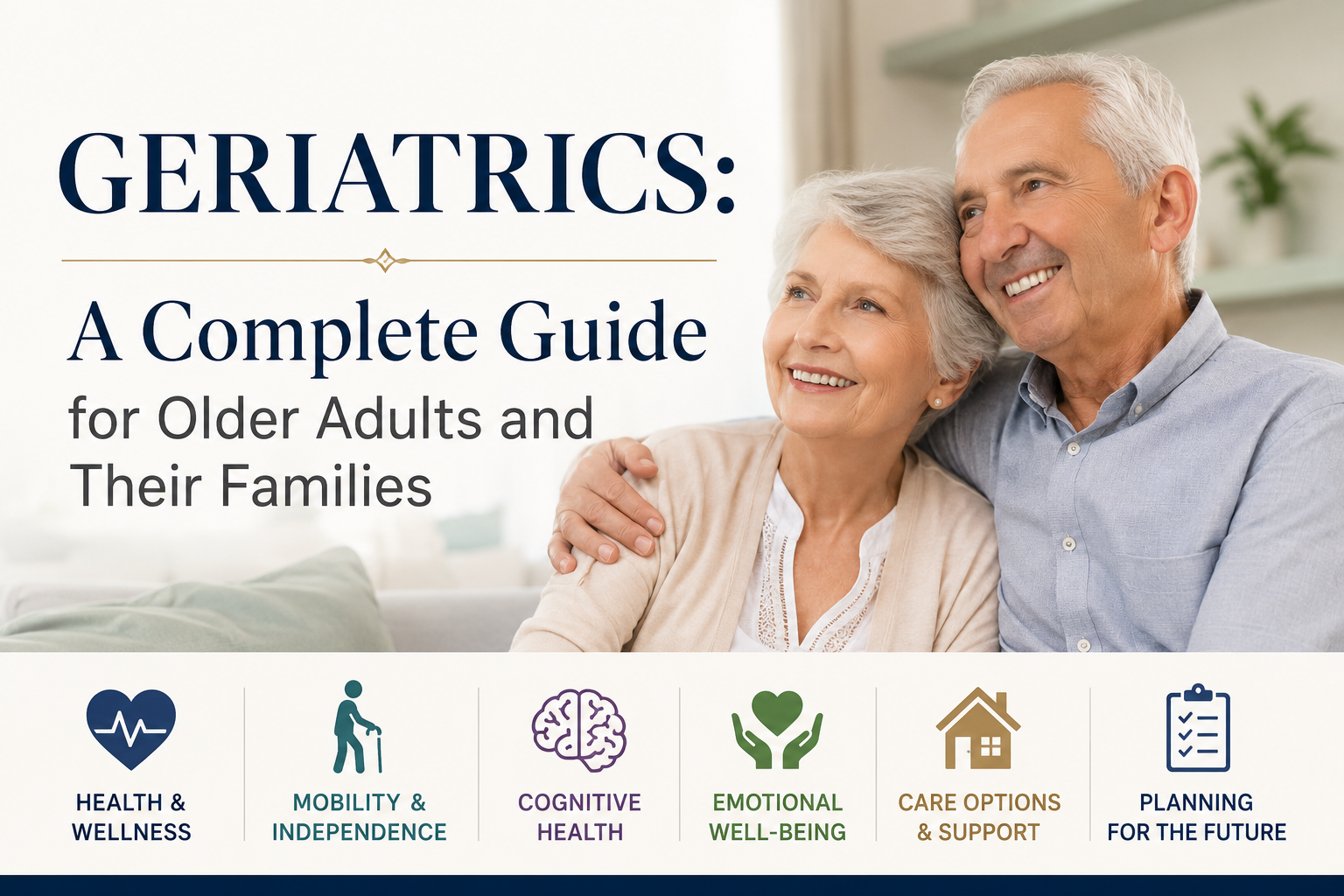
What Is Geriatrics?
Have you ever wondered what geriatrics really means? In simple words, geriatrics is the branch of medicine that looks after the health and care of older adults. It is also called geriatric medicine.
A doctor who works in this field is known as a geriatrician. These are not regular doctors. They have special training to understand the unique health needs of older people. They know how the body changes with age and how to treat problems that are common in later life.
Think of geriatrics as a medical specialty that sees the whole person, not just one disease. This makes it very different from other types of care.
The Simple Definition
Let us break this down in the simplest way possible:
- Geriatrics = medical care for older people
- Geriatrician = a doctor who specializes in care for older adults
- Gerontology = the study of ageing itself (how and why we age)
The word comes from two Greek words: “geras” meaning old age and “iatros” meaning healer. So, it literally means “healer of the old.”
The Age Question: There is no fixed age that makes someone a geriatric patient. But most specialists focus on adults aged 65 and older. They especially care for people over 80 or those with multiple health problems.
How Is Geriatrics Different From Regular Medicine?
Many people ask this question. The answer is simple but important.
A regular doctor might treat a single illness, like diabetes or high blood pressure. But a geriatrician looks at the bigger picture. Here is what makes geriatrics special:
A Holistic Approach
Geriatricians do not just treat diseases. They look at everything affecting your health:
- Physical health
- Mental and emotional well-being
- Social connections
- Your living environment
Focus on Function, Not Just Disease
For older adults, it is not always about curing a disease. It is about maintaining independence. Can you walk safely? Can you dress yourself? Can you manage your medications? These are the important questions.
Person-Centered Care
Geriatricians work with you and your family to understand your goals. Do you want to live independently? Do you want to stay active in your community? The care plan is built around what matters to you.
Comprehensive Assessment
Instead of just checking one thing, geriatricians do a full evaluation. They check your memory, your mood, your physical strength, your nutrition, and even your home environment.
Why Is Geriatrics So Important?
The world is getting older. In the UK, the number of people over 75 has grown a lot. And this trend is happening everywhere. Older adults often have multiple health conditions at the same time. This is called multimorbidity.
When you have several health problems, they can affect each other. For example, arthritis pain might stop you from exercising. Then your diabetes gets worse. A geriatrician understands this and manages everything together.
Geriatrics is not just about treating sickness. It is about adding life to years, not just years to life.
What Conditions Does Geriatrics Treat?
Geriatricians are experts in many health problems common in older adults. Here are some of the main ones:
Cognitive and Brain Health
- Dementia: This affects memory, thinking, and behavior. Alzheimer’s disease is the most common type.
- Delirium: This is a sudden state of confusion. It is a medical emergency and needs quick attention.
Physical Health Problems
- Falls and Balance Issues: One in three people over 65 falls each year. Geriatricians assess your risk and help prevent falls.
- Frailty: This is when the body becomes weaker and more vulnerable. It is not just old age – it is a health condition that can be managed.
- Urinary Incontinence: Loss of bladder control is common but can often be improved with treatment.
Medication Management
- Polypharmacy: This means taking five or more medications at once. It is very common in older adults. Geriatricians review all your medicines to reduce side effects and drug interactions.
The Philosophy of Care
The Liv Hospital geriatrics department describes their approach beautifully. They focus on dignity, respect, and expert guidance.
The care is based on a simple idea: older adults are not just a collection of diseases. They are people with life stories, values, and goals. A good geriatrician honors that history.
The goal is to help you live well – with independence, clarity, and strength.
Common Myths About Geriatrics
Let us clear up some confusion:
Myth 1: Geriatrics is only for very sick people.
Truth: Geriatricians also help healthy older adults prevent problems and stay well.
Myth 2: A geriatrician replaces your other doctors.
Truth: They work alongside your heart doctor, brain doctor, and others. They coordinate all your care.
Myth 3: It is too late to see a geriatrician.
Truth: Early care can prevent bigger problems. It is never too early or too late.
The Role of the Multidisciplinary Team
Geriatricians do not work alone. They lead a team of specialists:
- Physical Therapists help with mobility and strength
- Occupational Therapists help with daily activities like dressing and cooking
- Nutritionists plan healthy meals
- Social Workers arrange home care and support
- Psychologists provide emotional support
- Pharmacists review medications
This “round table” approach ensures every part of your health is cared for.
How Liv Hospital Supports Geriatric Care
The Liv Hospital has a dedicated Geriatrics Department that provides a “Medical Home” for older adults. They offer:
- Acute Care for Elders (ACE): Special hospital protocols to keep older patients safe – getting them moving early, removing catheters quickly, and providing restful environments.
- Memory Care Expertise: Advanced imaging to identify different types of dementia early.
- Polypharmacy Clinics: Special consultations just to review and optimize medications.
- Fall-Safe Design: Facilities designed with safety in mind – non-slip floors, handrails, good lighting.
Key Geriatric Services
When you visit a geriatrician, you can expect several important services:
Comprehensive Geriatric Assessment: A full check-up of your physical health, thinking abilities, mood, and daily function.
Medication Review: The team checks every medicine you take. They remove unnecessary ones and adjust doses. This is a key part of geriatric care.
Fall Risk Assessment: They check your balance, muscle strength, and home safety to prevent falls.
Advance Care Planning: These are conversations about your wishes for future care. It ensures your treatment matches your values.
Care Transitions: Moving from hospital to home can be risky. Geriatricians coordinate with social workers to ensure a safe discharge.
Healthy Ageing: The Goal
The ultimate goal of geriatrics is not just living longer. It is living well. Here are some simple ways to age healthily:
- Stay Active: Even light walking helps strength and balance.
- Eat Well: Good nutrition prevents many problems.
- Stay Social: Loneliness is a health risk. Stay connected with family and friends.
- Keep Learning: New skills keep the brain healthy.
- Manage Stress: Find ways to relax and enjoy life.
Conclusion: Your Partner in Healthy Ageing
Geriatrics is a medical specialty with a heart. It understands that ageing is a journey to be optimized, not a disease to be cured. The focus is on dignity, independence, and quality of life.
If you or a loved one is navigating complex health issues, frailty, or multiple conditions, consider speaking with a geriatrician. They are experts at managing the big picture.
For more information on services and expert care, visit the Liv Hospital website. You can also explore detailed resources about GERIATRICS Overview and Definition to learn more about how this specialty can support you.
Aging is a natural part of life. With the right care, it can be a time of strength, joy, and continued independence.

 Welcome to CreativeGeneralist.com, your premier destination for authentic news, captivating stories, and insightful posts curated from across the globe. We meticulously select diverse content to inform, entertain, and inspire.