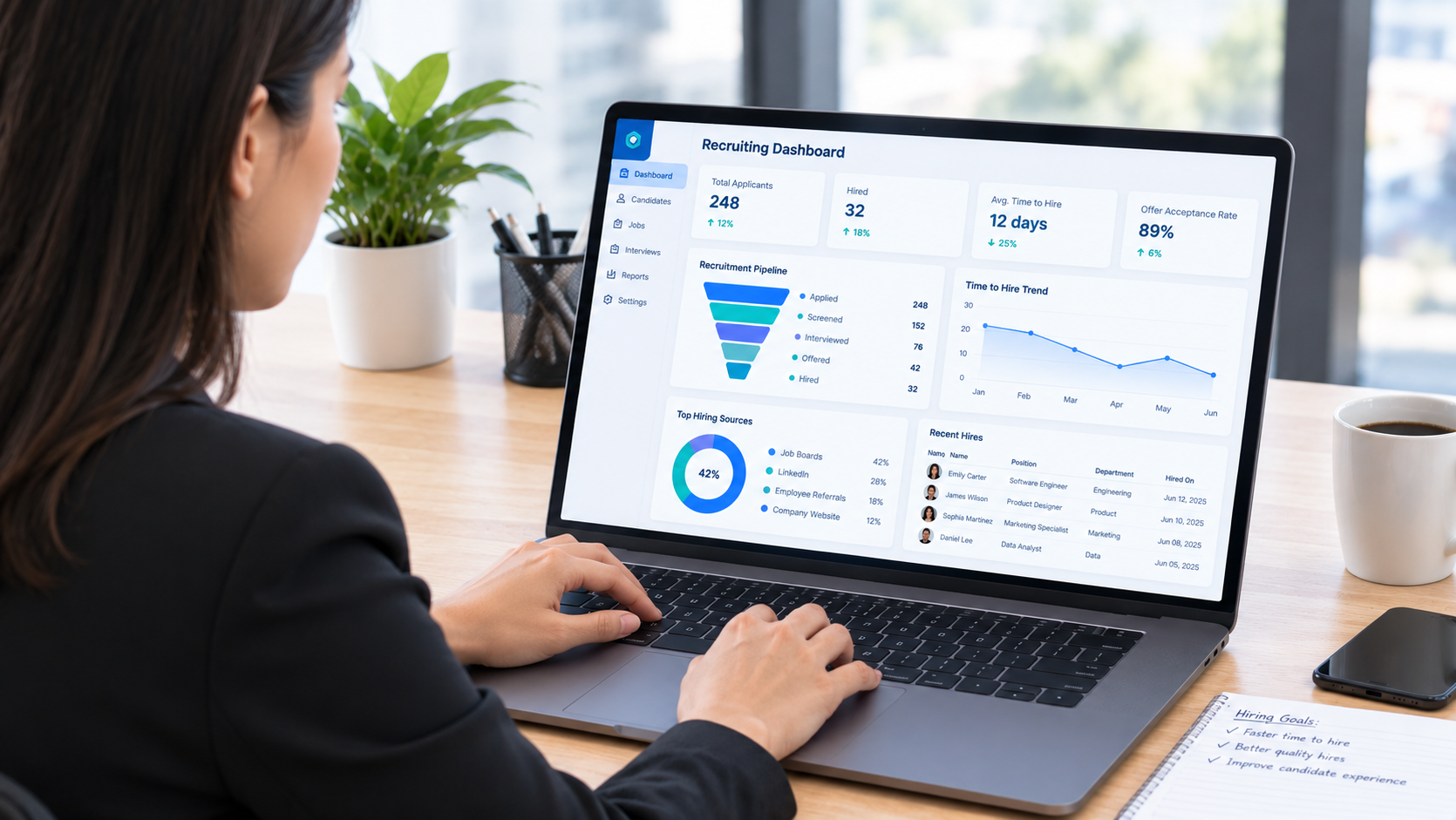
Recruiting teams handle large amounts of information throughout the hiring process. From applications and interviews to candidate communication and offer decisions, keeping track of every detail can become difficult without a structured system. A well-designed recruiting dashboard brings important hiring data together, helping recruiters and hiring managers understand progress and make informed decisions.
Define the Goals of Your Recruiting Dashboard
Before building a dashboard, determine what you want it to accomplish. Different organizations may focus on reducing time-to-hire, improving candidate quality, monitoring recruitment costs, or identifying bottlenecks in the hiring process.
Clear goals help determine which metrics should appear on the dashboard. Instead of displaying every available data point, focus on information that directly supports hiring decisions and recruitment performance.
Track the Most Important Recruitment Metrics
A useful recruiting dashboard should provide a clear overview of the hiring pipeline. Key metrics can include the number of applicants, candidates at each recruitment stage, interview completion rates, offer acceptance rates, time-to-hire, and source of hire.
Tracking these metrics over time can help teams identify patterns. For example, if candidates consistently leave the process after interviews, recruiters can investigate whether interview scheduling, communication, or other factors may be creating unnecessary delays.
Create a Clear Hiring Pipeline
A recruiting dashboard should make it easy to understand where candidates are within the hiring process. Organizing candidates into stages such as application, screening, interview, assessment, offer, and hiring provides a simple visual representation of recruitment activity.
This visibility allows recruiters to identify positions with limited candidate activity or stages where applications are accumulating. Hiring managers can then focus their attention where it is most needed.
Use Data to Support Better Decisions
Recruitment data becomes more valuable when it is presented in a way that supports comparison and analysis. Dashboards can help teams compare hiring sources, recruitment timelines, job roles, and candidate progression.
For example, if one sourcing channel consistently produces qualified candidates while another generates large numbers of applications but few successful hires, the recruiting team can examine the difference and adjust its approach accordingly.
Organizations working with staffing agencies near me can also use dashboard data to maintain a clearer view of external recruiting activity and compare results across different hiring channels.
Make the Dashboard Easy to Use
A dashboard should simplify information rather than make it more complicated. Use clear labels, logical sections, and simple visualizations so users can understand important information quickly.
Recruiters should be able to identify urgent hiring needs, pipeline changes, and performance trends without navigating through multiple screens. The dashboard should also provide different views when necessary, allowing recruiters and hiring managers to focus on the information most relevant to their responsibilities.
Keep Candidate Data Organized
Accurate candidate information is essential for meaningful recruitment reporting. A dashboard should connect relevant candidate data across applications, interviews, communication, assessments, and offers.
Consistent data entry and regular updates help prevent inaccurate reports. When recruitment information is incomplete or outdated, even well-designed dashboards can produce misleading results.
Review and Improve the Dashboard
Recruitment needs can change as organizations grow. After launching a dashboard, regularly review whether its metrics and views are still useful.
Gather feedback from recruiters and hiring managers to identify information they frequently need or features that create unnecessary complexity. Updating the dashboard based on actual usage can make it increasingly valuable as a recruitment decision-making tool.
Conclusion
A recruiting dashboard can turn scattered hiring information into a clearer picture of recruitment performance. By defining specific goals, tracking meaningful metrics, organizing the hiring pipeline, and presenting data clearly, organizations can give recruitment teams better information for making timely and informed hiring decisions.

 Welcome to CreativeGeneralist.com, your premier destination for authentic news, captivating stories, and insightful posts curated from across the globe. We meticulously select diverse content to inform, entertain, and inspire.