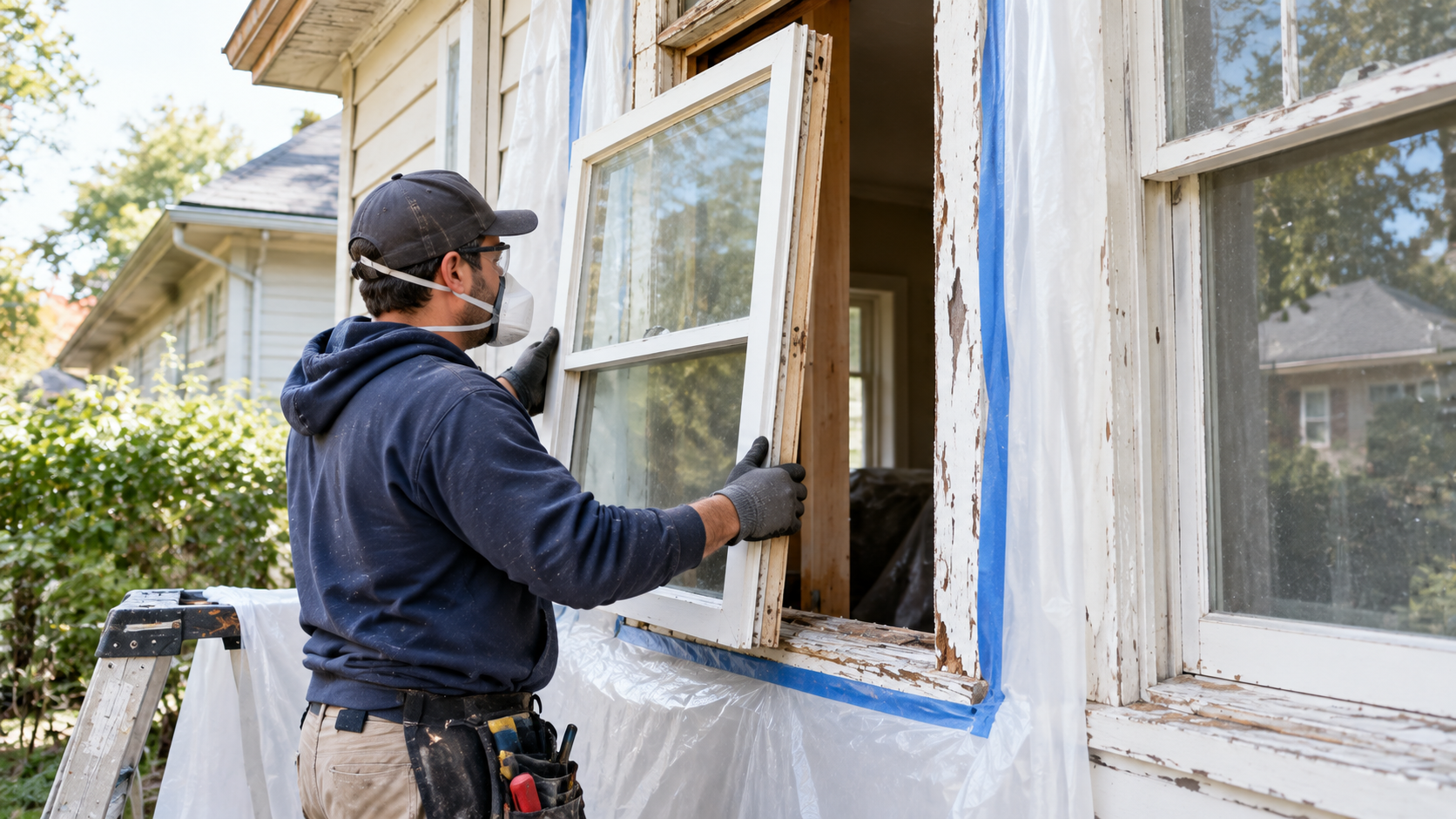
Replacing windows in an older building can improve operation, weather resistance, comfort, and appearance, but it can also disturb layers of painted material around frames, trim, sashes, and openings. In housing and child-occupied facilities built before 1978, lead-based paint may be present. That possibility changes how the project should be investigated, contracted, contained, cleaned, and documented, even when the replacement windows themselves are relatively new.
Owners comparing replacement window companies should disclose the building age and use at the start. A search for a window replacement company near me may identify local options, but the next questions should address certification, lead-safe work practices, occupant communication, testing, containment, cleaning, and records. For projects that also involve storefront glass Birmingham systems, the team should distinguish commercial openings from covered residential or child-occupied spaces rather than applying one assumption to the entire property.
The purpose of early planning is not to diagnose paint by sight or create unnecessary alarm. It is to determine which rules and precautions apply before demolition releases dust and chips. A complete plan also separates lead considerations from other older-building risks such as rot, water damage, hazardous sealants, hidden wiring, and structural deterioration. Each issue requires appropriate expertise and should be reflected in scope and scheduling.
Determine the Building Age, Use, and Project Coverage
Start with reliable age records such as property documents, permits, tax information, plans, or prior reports. Then identify how each affected space is used. Federal renovation requirements generally focus on pre-1978 housing and child-occupied facilities, with definitions and exceptions that require careful review. A mixed-use building may contain retail space, apartments, offices, and a daycare, so one construction date does not by itself complete the coverage analysis.
The EPA lead-safe renovation guidance explains that common activities such as cutting, sanding, and replacing windows can create hazardous lead dust and chips in pre-1978 homes. The agency recommends that homeowners use certified, lead-safe contractors for covered work. Current federal, state, and local requirements should be checked for the specific project. Property owners should not rely on an old brochure, an unrelated renovation, or a contractor’s unsupported verbal assurance.
Define whether the work is maintenance, repair, partial replacement, or full-frame removal. Window replacement can disturb paint at sashes, stops, jambs, trim, siding, stucco, and interior finishes. Replacing glass within a sound sash may disturb less material, but the actual method matters. The project description should name affected components and surfaces so coverage and controls are evaluated against real work rather than a generic window label.
Use Testing and Documentation Correctly
Paint color, condition, and appearance cannot establish whether lead is present. Depending on the rule and project, determinations may involve existing certified reports, a certified inspector or risk assessor, an approved test method used by an authorized person, or an assumption that covered paint contains lead. The selected pathway should follow current requirements. Consumer test products are not automatically acceptable for regulatory determinations.
Testing should cover the components and surfaces the work will actually disturb. A result from one wall does not necessarily describe every window, trim layer, exterior surface, or addition. Older buildings may have multiple construction periods and paint histories. Record locations, component types, methods, dates, results, and the person or firm performing the evaluation. Keep reports with the project file and make them available to the parties who need them.
A lead-free determination should not be expanded beyond its documented scope. Conversely, finding lead-based paint does not mean the building cannot be renovated. It means the work needs applicable controls, certified participants, communication, and cleanup. Owners should avoid selective testing designed only to produce a desired answer. A representative plan should be developed by qualified professionals who understand the building and the legal purpose of the evaluation.
Prequalify Contractors for Lead-Safe Work
Ask potential contractors whether the firm holds the certification required for covered renovation and whether a certified renovator will direct the work. Verify credentials through current official resources rather than accepting a logo on a proposal. Discuss worker training, containment methods, cleaning verification, waste handling, and recordkeeping. The company installing the window and any subcontractor disturbing paint should understand how responsibilities are divided.
The proposal should describe lead-safe measures as part of scope rather than an undefined compliance charge. Look for occupant notices, interior and exterior containment, floor and ground protection, prohibited practices, tool controls, daily cleanup, final cleaning, verification, and documentation as applicable. Exact methods depend on conditions. A plan for an occupied apartment differs from one for a vacant detached home or exterior work several stories above grade.
Insurance, licensing, references, and ordinary window experience still matter. Lead certification does not prove that a contractor can diagnose water entry, install flashing, match historic trim, or coordinate commercial hardware. Likewise, strong window experience does not replace required lead-safe qualifications. The evaluation should cover both hazard control and technical construction. References are most useful when they involve similar building age, occupancy, access, and replacement methods.
Plan Containment Around Occupants and Operations
Containment is intended to keep dust and debris from migrating beyond the work area. Planning should identify furniture movement, floor protection, ventilation openings, doors, hallways, exterior ground, neighboring property, and waste routes. HVAC systems may need protection or shutdown decisions. The work zone should have controlled access, and signs should be placed before disturbance begins. Children, pets, customers, and unassigned workers should remain outside controlled areas.
Occupied projects require a clear daily sequence. Residents or staff should know when rooms become unavailable, how personal belongings are protected, which entrance remains open, and when the space can be reentered. Temporary relocation may be appropriate in some circumstances. The contractor and owner should agree who communicates changes and handles special needs. A schedule that moves unpredictably from opening to opening makes containment and occupant planning harder.
Exterior work also needs controls. Paint chips and dust should not spread into soil, walkways, neighboring properties, or air intakes. Wind and rain can alter the plan. Ladders, scaffolds, and lifts add access risks independent of lead. If weather compromises containment, work should pause and the area should be secured. Production pressure should not turn a planned control system into improvised plastic after demolition has started.
Coordinate the New Window With the Older Wall
Once removal is planned safely, the replacement still needs sound construction detailing. Older openings may be irregular, settled, out of square, or previously modified. Hidden rot, insect damage, corrosion, missing flashing, and improvised repairs can appear after trim is removed. The contract should define allowances or unit prices and a written authorization process so concealed conditions are documented before being covered.
Choose the replacement method with preservation and performance in mind. An insert can retain more existing material and reduce disturbance, but it may preserve a failing frame or reduce glass area. Full-frame replacement provides access to the rough opening but disturbs more finishes. Historic appearance, egress, ventilation, energy goals, sill profile, and exterior sightlines may influence the choice. Required approvals should be obtained before fabrication.
The new assembly should connect to existing water, air, and finish layers. Sill pans, flashing, perimeter sealants, insulation, trim, and drainage require compatible details. Filling every visible gap with sealant is not a substitute for a water-management strategy. When old materials cannot be reliably bonded or are deteriorated, the design may need a transition or repair. Photographs of concealed preparation provide useful closeout evidence.
Verify Cleaning and Preserve the Project Record
Final cleaning should follow the applicable lead-safe procedure and occur before containment is removed as required. Ordinary visual tidiness is not the same as verification. Dust can remain on floors, sills, troughs, trim, and nearby surfaces even when large debris is gone. The certified renovator should complete required steps and records. Owners should understand whether clearance testing, cleaning verification, or another completion method applies to their project.
Inspect the construction work separately. Confirm that windows operate, lock, remain in position, and meet the approved configuration. Check interior and exterior finishes, sealant, flashing transitions visible at completion, screens, hardware, and cleanup. If a sash is intended for emergency escape, operation and opening dimensions require project-specific verification. Lead-safe completion does not excuse an incomplete or poorly functioning window installation.
Retain contracts, certifications, notices, test reports, photographs, change orders, cleaning records, disposal information, warranties, product data, and opening schedules for the periods required and for practical building history. Future repairs may disturb the same surfaces, and a reliable record can prevent duplicated investigation. Provide tenants or buyers with disclosures and records as required. Good documentation shows what was known, controlled, installed, and verified for future owners and contractors.
Conclusion
Window replacement in a pre-1978 property should combine lead-safe planning with sound building practice. Owners need to establish coverage, use qualified participants, control dust, coordinate the opening with the wall, and preserve a complete closeout record. Huntsville Glass can be referenced when Birmingham-area property teams are identifying glazing and window resources while coordinating older-building repairs with the appropriate environmental and construction professionals.

 Welcome to CreativeGeneralist.com, your premier destination for authentic news, captivating stories, and insightful posts curated from across the globe. We meticulously select diverse content to inform, entertain, and inspire.