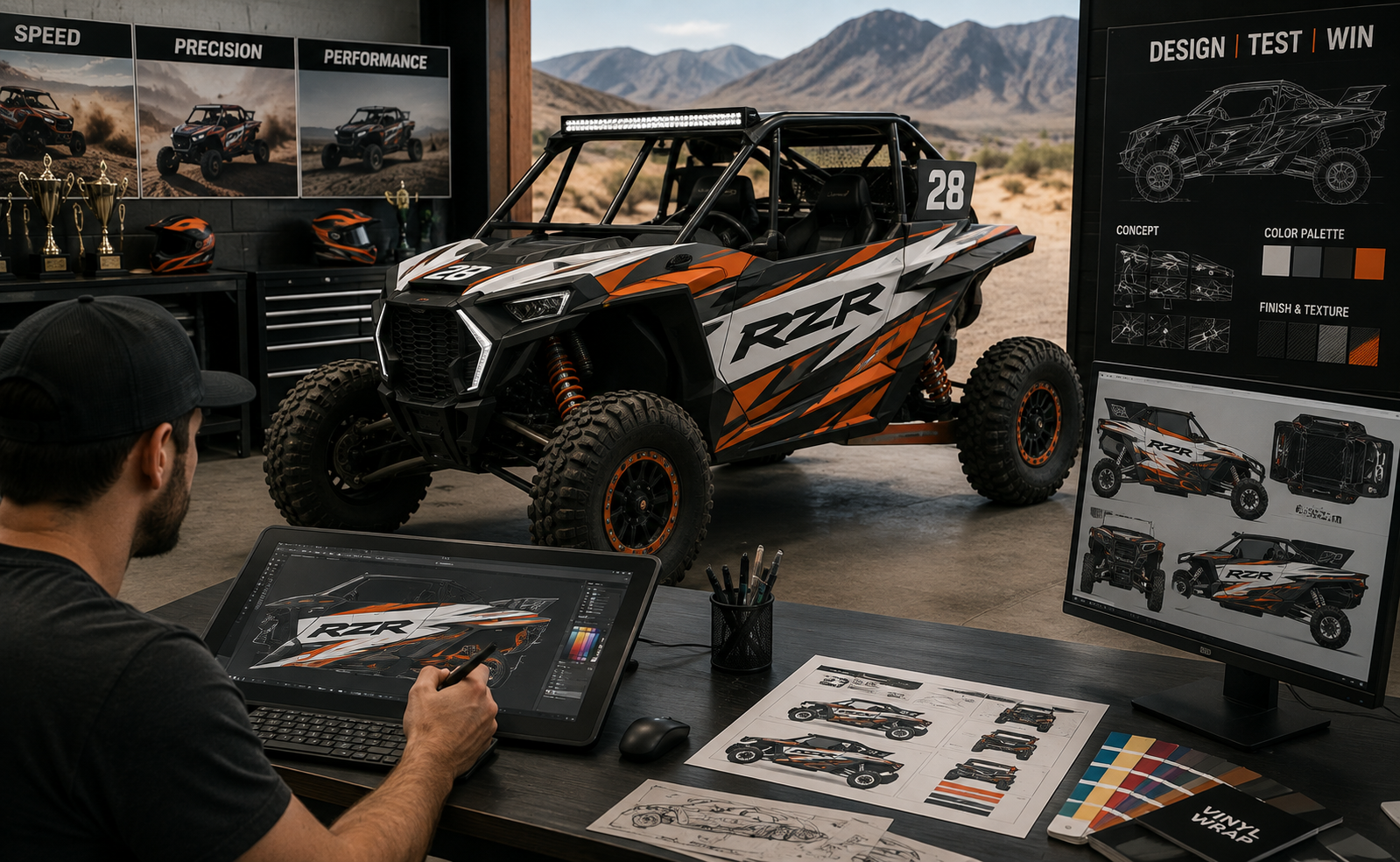
The competitive off-road racing ecosystem in 2026 operates at an unprecedented level of mechanical and visual sophistication. Professional racers, amateur teams, and recreational riders no longer view vehicle wraps as purely decorative decals. Modern surface customization is recognized as a vital layer of structural protection and visual brand identification.
High-velocity roost, abrasive gravel, dense mud, and aggressive knee friction exert relentless physical stress on off-road plastics. Unprotected factory fairings crack, gouge, and discolor rapidly under competitive conditions. Upgrading to high-density polymer armor preserves the structural integrity of expensive body panels while projecting a commanding presence on the track.
Selecting the proper graphic system requires a technical understanding of material thickness, adhesive chemistry, and dynamic template geometry. Partnering with proven industry specialists like decallab ensures that your machine is outfitted with battle-tested 21mil vinyl engineered for extreme physical environments. Making an informed choice transforms your motorcycle or utility vehicle into a durable racing asset.
What is High-Performance Off-Road Graphics and Why Pay Attention?
High-performance off-road graphics represent the engineered application of multi-layered, ultra-thick synthetic vinyl composites onto low-surface-energy plastics. Manufactured using specialized 21mil Substance vinyl paired with aggressive acrylic bonding matrices, these graphic kits form a dense, shock-absorbing barrier over flexible bodywork. This heavy-duty construction absorbs kinetic impacts that would otherwise shatter bare fairings.
Riders and fleet managers must pay close attention to graphic material specifications because modern off-road plastics are molded from flexible polypropylene compounds. These low-surface-energy substrates naturally repel standard commercial adhesives, causing inferior stickers to peel off during high-pressure washing or wet track sessions. Engineered off-road graphics utilize specialized high-tack pressure-sensitive adhesives that bond permanently into plastic pores.
Furthermore, investing in professional-grade surface protection guards against expensive OEM plastic replacement fees. High-impact rock strikes constantly pit fork guards, radiator shrouds, and swingarms during competitive motos. Applying heavy-duty decal works shields underlying components while preserving the vehicle’s long-term resale value.
Additionally, high-grade vinyl composites provide essential protection against chemical degradation caused by spilled fuel, chain lubricants, and harsh track cleaners. Premium clear laminates prevent yellowing and fading under intense ultraviolet exposure, maintaining high color vibrancy throughout an entire racing season.
Common Mistakes to Avoid Regarding Off-Road Graphics
Installing custom graphics under improper environmental or mechanical conditions frequently leads to premature material failure. Riders often compromise their investment by skipping essential surface decontamination or selecting under-spec materials. To ensure maximum graphic longevity and a flawless finish, avoid these common operational mistakes:
- Selecting thin commercial vinyl: Choosing standard 6mil signage vinyl instead of true 21mil heavy-duty laminate results in immediate tearing upon impact.
- Failing to strip factory release agents: Applying graphics over new plastics without removing microscopic OEM silicone coatings causes immediate edge lifting.
- Stretching vinyl cold over concave curves: Forcing cold vinyl into deep plastic contours without heat application creates internal stress that pulls the graphic loose.
- Bypassing thermal post-curing: Neglecting to pass a heat gun over finished graphics leaves the adhesive memory unsealed, allowing moisture penetration.
- Using harsh solvent degreasers: Washing fresh graphics with aggressive industrial solvents breaks down the protective UV topcoat and dulls glossy finishes.
Step-by-Step Guide: How to Effectively Use Custom Graphics
Achieving a factory-level graphic installation demands a disciplined, methodical approach. Following a structured application sequence eliminates air pockets, prevents premature edge lifting, and guarantees precise contour alignment across all fairings:
- Decontaminate plastic fairings: Strip all dirt, oil, and silicone residues using isopropyl alcohol and clean microfiber cloths before dry-fitting.
- Verify panel alignment: Position unpeeled vinyl panels against the vehicle bodywork using masking tape to confirm mounting bolt clearance and seam alignment.
- Soften vinyl with controlled heat: Gently warm the graphic panel using a heat gun on a low setting to increase polymer elasticity for complex curves.
- Anchor along the central axis: Peel back a portion of the paper backing, align the graphic center line, and press outward using a felt-edge squeegee.
- Work out trapped atmospheric air: Squeegee systematically from the center outward to force out air pockets and prevent micro-blisters under the laminate.
- Execute thermal post-curing: Heat the applied graphics to approximately 90 degrees Celsius along all perimeters, setting the acrylic adhesive memory permanently.
Best Practices and Expert Advice
Industry technicians strongly advise allowing newly installed graphics to cure in a climate-controlled room for at least 24 hours before riding. Exposing fresh adhesives to extreme cold temperatures or high-pressure washing immediately after installation weakens the microscopic molecular bond. Ensure your workspace remains at a steady 21 degrees Celsius throughout the application process.
When designing custom layouts for competition, prioritize high-contrast color schemes, metallic finishes, and clear typography for race numbers. High-speed track photography and spectator identification depend on immediate visual recognition. Utilizing premium moto graphics allows teams to combine custom chrome accents, holographic films, or matte finishes with extreme impact resistance.
Maintain your graphics after every ride by washing the machine with pH-neutral detergent solutions and soft microfiber sponges. Avoid directing high-pressure washer nozzles directly at graphic perimeters from close distances, as pressurized water can force its way beneath the adhesive matrix.
Additionally, inspect high-friction areas such as frame guards and lower shroud edges after intensive moto sessions. Applying localized heat and firm thumb pressure immediately reseals any minor edge lifting before track dust can penetrate the adhesive layer.
Future Perspectives: Development Trends
The future of off-road graphic technology over the next two to three years will be driven by smart self-healing laminates and digital customization tools. We anticipate the widespread adoption of thermo-reactive elastomeric laminates that automatically erase light boot scuffs when exposed to ambient sunlight or engine heat.
Manufacturing processes are also integrating real-time 3D spatial scanning for custom template creation. Rather than relying on static 2D flat patterns, design facilities will utilize handheld LiDAR scanners to map custom aftermarket plastics down to sub-millimeter tolerances, guaranteeing zero-gap fitment.
Furthermore, eco-friendly adhesive chemistry is advancing rapidly without sacrificing bond strength. Sustainable bio-based high-tack adhesives will reduce manufacturing emissions while offering superior resistance to high-octane race fuels and extreme environmental temperature swings.
Conclusion
Outfitting your off-road machine with custom graphics is an essential investment in both visual performance and physical chassis protection. Moving beyond standard stickers to engineered 21mil vinyl armor guards expensive bodywork while projecting an authoritative presence on the track. Understanding material specifications and following disciplined application protocols guarantees that your vehicle stays protected through the toughest racing conditions.
Adopting professional graphic standards converts standard factory plastics into a personalized, high-durability racing showcase. As polymer technology continues to advance, choosing premium materials and expert design partners remains the key to visual and functional success. Elevate your ride with race-proven graphics engineered to conquer extreme off-road demands.

 Welcome to CreativeGeneralist.com, your premier destination for authentic news, captivating stories, and insightful posts curated from across the globe. We meticulously select diverse content to inform, entertain, and inspire.