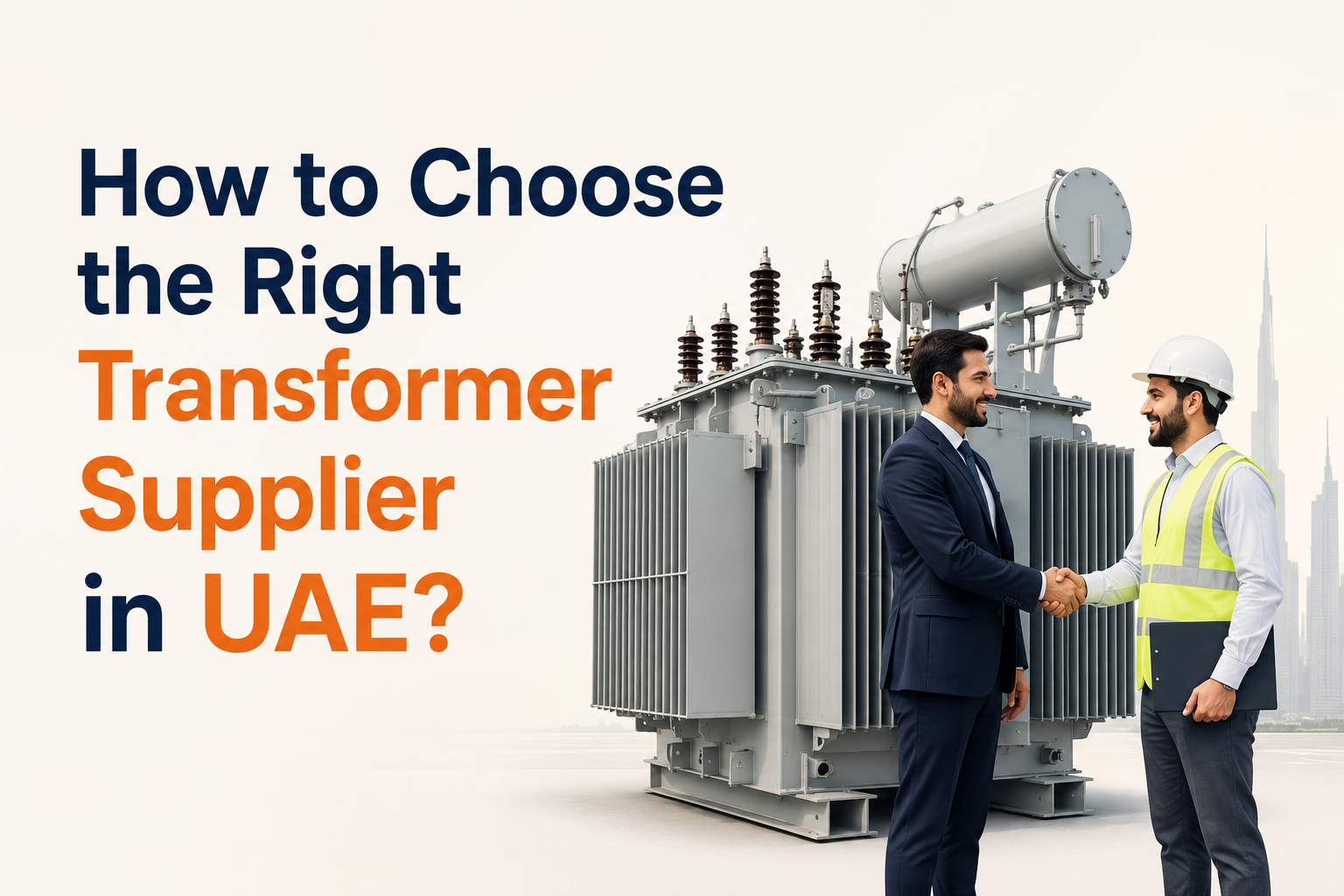
The UAE continues to witness rapid growth in infrastructure, renewable energy, industrial manufacturing, and commercial construction projects. With increasing demand for reliable power distribution systems, choosing the right transformer supplier has become one of the most important decisions for EPC contractors, utilities, industrial operators, and infrastructure developers.
A transformer is not just another electrical component. It directly affects operational efficiency, safety, project reliability, and long-term maintenance costs. This is why businesses in the UAE are now focusing on suppliers that can deliver high-quality products, strong engineering support, and reliable after-sales service.
Why Is Choosing the Right Transformer Supplier Important?
The performance of a transformer impacts the entire electrical network. Poor-quality equipment can lead to voltage instability, overheating, energy losses, and expensive downtime. In sectors like utilities, oil and gas, manufacturing, and renewable energy, even a small transformer failure can disrupt operations significantly.
The UAE’s harsh environmental conditions also make transformer quality even more important. High ambient temperatures, dust exposure, and continuous load demands require transformers that are specifically designed for reliable operation in Middle Eastern conditions.
This is why businesses prefer working with experienced high voltage transformer suppliers that understand regional project requirements and international quality standards.
Check the Supplier’s Manufacturing Experience
One of the first things to evaluate is the supplier’s manufacturing expertise and industry experience. Established manufacturers usually have better engineering capabilities, stronger quality control systems, and more advanced production infrastructure.
A reliable supplier should have experience in manufacturing different types of transformers including power transformer, distribution transformers, furnace transformers, rectifier transformers, and renewable energy application transformers.
Indian manufacturers like TARIL – Transformers and Rectifiers (India) Limited have developed a strong presence in international markets including the UAE. According to the company’s product information, they manufacture power transformers up to 1200 kV and 500 MVA for utilities, industries, renewable projects, and infrastructure sectors.
Why Do Testing and Certifications Matter?
Transformer reliability depends heavily on manufacturing quality and testing standards. Before selecting a supplier, buyers should confirm whether the company follows international standards such as IEC, IEEE, and IS specifications.
Reputed power transformer manufacturers usually conduct extensive testing procedures including routine testing, type testing, impulse testing, and short-circuit testing. These tests ensure the transformer can handle real-world operating conditions safely and efficiently.
Suppliers with advanced testing laboratories and strict quality assurance systems generally provide more dependable products with lower failure risks.
Should You Choose a Supplier With Customization Capabilities?
Every project has different technical requirements. A utility substation project may need large-capacity transformers, while industrial plants may require specialized solutions for heavy machinery or renewable integration.
Working with suppliers that provide customized transformer solutions gives businesses more flexibility. Modern projects often require transformers with specific voltage ratings, cooling systems, insulation types, and monitoring technologies.
Experienced high voltage transformer suppliers can also help optimize transformer design based on project load conditions and environmental requirements.
Why Is After-Sales Support Important?
Many buyers focus only on pricing during procurement, but after-sales support is equally important. Transformers are long-term assets that require proper installation guidance, maintenance support, and technical assistance.
Reliable suppliers usually provide commissioning support, troubleshooting assistance, spare parts availability, and maintenance recommendations. This becomes especially critical for utility and industrial operations where downtime can create major financial losses.
Companies with international project experience often maintain stronger technical support systems because they regularly handle complex export and infrastructure projects.
Evaluate the Supplier’s Export and Project Experience
Suppliers with global project experience are generally more familiar with international engineering requirements and documentation standards. This helps ensure smoother project execution and better communication during procurement.
According to information available on its UAE operations pages, TARIL has supplied transformers to more than 40 countries with over 18,000 installations worldwide. Such experience can provide added confidence for UAE buyers handling large infrastructure or industrial developments.
Export-focused manufacturers also usually have stronger logistics capabilities, which helps reduce delays during international shipments and project delivery schedules.
Why Are Energy-Efficient Transformers Becoming Popular in UAE?
Energy efficiency is becoming a major priority across the UAE’s power and infrastructure sectors. Modern transformers are now designed to reduce transmission losses, improve thermal performance, and support sustainability goals.
Many businesses are now looking for transformers with lower operating losses and environmentally safer insulation systems. Some manufacturers are also introducing ester oil transformers for improved fire safety and environmental performance.
As the UAE continues expanding renewable energy projects and smart grid infrastructure, demand for advanced and efficient transformer solutions is expected to grow further.
How Can Businesses Compare Transformer Suppliers Effectively?
Instead of choosing suppliers based only on price, businesses should compare overall value and long-term reliability. Important evaluation factors include manufacturing capability, certifications, testing standards, project references, product range, technical support, and delivery timelines.
Visiting manufacturing facilities or conducting supplier audits can also help buyers better understand production quality and engineering capabilities.
Choosing the right power transformer supplier ultimately helps businesses improve operational reliability, reduce maintenance risks, and ensure long-term project success in the UAE’s growing energy and industrial sectors.
FAQs
What should I check before choosing a transformer supplier in UAE?
You should evaluate manufacturing experience, certifications, testing facilities, product quality, project references, delivery capability, and after-sales support before selecting a supplier.
Why are experienced high voltage transformer suppliers preferred?
Experienced suppliers understand regional operating conditions, international standards, and complex project requirements, which helps improve transformer reliability and performance.
Are Indian transformer manufacturers supplying to UAE projects?
Yes, many Indian manufacturers supply transformers to UAE utility, infrastructure, renewable energy, and industrial projects due to their engineering expertise and export capabilities.
Why is transformer testing important?
Testing ensures that transformers meet safety, performance, and durability standards before installation. Proper testing helps reduce operational risks and unexpected failures.
Why are energy-efficient power transformers in demand?
Energy-efficient transformers help reduce power losses, lower operating costs, improve sustainability, and support modern infrastructure and renewable energy projects.

 Welcome to CreativeGeneralist.com, your premier destination for authentic news, captivating stories, and insightful posts curated from across the globe. We meticulously select diverse content to inform, entertain, and inspire.