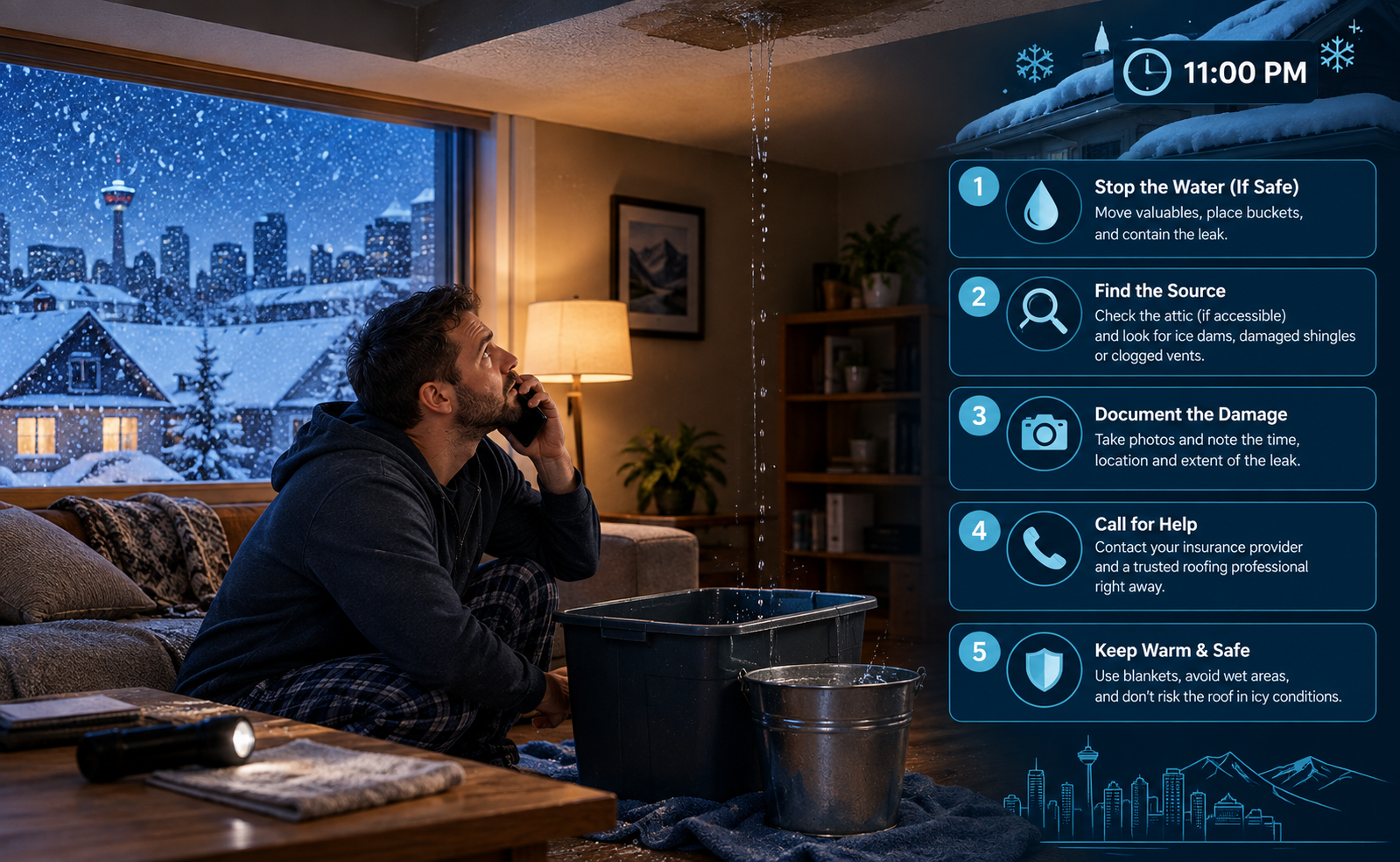
When water starts coming through the ceiling at minus twenty, the next sixty minutes matter more than the phone call. Here is the order that actually protects the house.
It rarely happens during business hours. A stain spreads across the ceiling, a drip starts hitting the carpet, or a bulge appears overhead, and it is eleven at night in the middle of a Calgary cold snap. Panic makes people do the wrong things in the wrong order: grab a ladder for the roof, start tearing at drywall, or call the first number that shows up in a search without checking who it belongs to.
There is a right order for the first hour of a winter leak, and it has almost nothing to do with fixing the roof tonight. It is about stopping the damage from spreading, keeping everyone safe, and setting up the actual repair to go smoothly once daylight and a reasonable temperature come back.
Safety Comes Before the Mop
Water and electricity in the same room is the first thing to check. If the leak is anywhere near a light fixture, outlet, or switch, shut off power to that room at the panel before doing anything else, even if the fixture looks dry from where you are standing.
A bulging section of ceiling is a warning, not a curiosity. Drywall can hold a surprising amount of water before it fails, and when it fails it comes down as a heavy, soaked sheet all at once. Keep people and pets out from directly underneath a bulge. And under no circumstance should anyone go up onto an icy roof in the dark to look for the source. A slope covered in ice or fresh snow at night, in the cold, is how a roof leak turns into a fall injury, and it will not tell you anything a flashlight from the attic hatch cannot.
Contain the Water Before You Chase the Leak
Once the room is safe, the next move is containment. Slide furniture and anything valuable out from under the drip. A bucket or large bowl catches the immediate flow, and a folded towel or old sheet on the floor around it catches splash and slow seepage that misses the bucket.
If water is running along a ceiling joist before it drips, a length of string or fishing line pinned at the drywall and running down into the bucket will guide the flow to one point instead of letting it spread and drip in three places. It looks improvised. It works, and it buys time until morning.
If the leak is anywhere near electronics, area rugs, or hardwood flooring, move what you can before the pool of water spreads that far. A rug left sitting in water overnight can stain permanently, and hardwood exposed to standing water for several hours is more likely to cup or warp than to dry out cleanly the next morning. None of this needs to be a thorough sweep of the room. Grabbing the obvious high-value items in the first few minutes matters more than getting every last thing off the floor.
Relieve a Bulging Ceiling on Purpose
This is the step that goes against instinct. If a section of ceiling is visibly bulging with trapped water, puncturing it in a controlled way, with a screwdriver or the corner of a tool, straight into a bucket held underneath, causes far less damage than waiting for the ceiling to fail on its own.
An uncontrolled ceiling collapse spreads water and debris across the whole room, soaks the flooring, and often takes insulation and drywall dust with it. A small, deliberate hole at the lowest point of the bulge lets the water out in one place, on your schedule, into a container instead of onto the floor.
Document Before You Clean Up Anything
Before mopping, moving furniture back, or throwing out ruined items, take photos and a short video of everything: the ceiling stain or hole, the water on the floor, any damaged furniture or flooring, and a wide shot of the room showing the extent of it. Insurance adjusters work from documentation, and damage that has already been cleaned up is much harder to make a claim for.
Keep any severely damaged items until the adjuster has had a chance to see them or confirms photos are enough. Write down the date and approximate time the leak started, since claims often ask for this and it is easy to forget by morning.
The Leak Entry Point Is Rarely Where the Stain Is
Water travels before it drips. It can enter through a damaged shingle, a worn flashing seam, or an ice dam near the roofline, then run several feet along a rafter, a truss, or a layer of sheathing before finding a low point and coming through the drywall. The stain on the ceiling marks where the water gave up and fell, not where it got in.
This is why chasing the stain with a flashlight from inside rarely finds the actual problem, and why the person doing the repair usually needs to get on the roof in daylight to trace the path from the outside. Explaining this to whoever answers the after-hours call sets the right expectation from the start. Tonight is about stopping the spread, and the exact hole gets found once there is enough light to look properly.
What to Ask Before You Hang Up the Phone
Whoever answers the after-hours call is about to become part of tonight’s plan, so a few direct questions up front save confusion later and make it easier to judge whether the company on the other end of the line is one you actually want on your roof.
- When can someone realistically arrive, and is that an estimate or a firm commitment
- What temporary measure will they perform tonight versus what has to wait for daylight
- Is there a callout fee, and does it apply toward the cost of the eventual repair
- Will they provide a written estimate before any permanent repair work begins
A company that answers these plainly, without hedging or rushing past the question, is easier to trust with a decision made at midnight. A company that gets vague or impatient with basic questions is telling you something about how the rest of the job is likely to go, and that is worth noticing before anyone gets on your roof.
What a Reputable Contractor Can and Cannot Do at Minus Twenty
Roofing materials do not behave the same way in deep cold. Asphalt shingles get brittle and can crack under a boot at very low temperatures, sealant will not cure properly, and adhesives that need warmth to bond just sit there uncured until the temperature comes up. A crew that tells you they cannot do a full permanent repair at minus twenty is telling you something true about how these materials behave in the cold, and that is worth listening to.
What a legitimate after-hours call can usually do is a temporary measure: a tarp, a temporary patch, or securing a loose section to stop more water from getting in until conditions allow a proper repair. Anyone who promises a full, guaranteed, permanent fix in the middle of a cold snap at night is promising something the materials themselves do not support.
Don’t Sign Anything Under Pressure at Midnight
A leak at night creates urgency, and urgency is exactly the condition under which people sign contracts they would never sign in daylight. A legitimate emergency call can stabilize the situation without a signature committing to a specific dollar figure for permanent repairs decided in the dark, under stress, with water still coming through the ceiling.
It is reasonable to ask for a temporary tarp or patch tonight and a written estimate for the full repair once someone can actually see the roof in daylight. A contractor who pushes back hard on that request, or insists the full contract has to be signed immediately, is a signal to slow down and call someone else in the morning.
Calm, In Order, Beats Fast
A winter roof leak feels like an emergency because it is one, but the actual sequence that protects the house is calm and mechanical: check for electrical risk, contain the water, relieve pressure on a bulging ceiling deliberately, document everything before cleanup, and understand that tonight’s job is limited to stabilization, with the full repair to follow once conditions allow it.
Angel’s Roofing takes after-hours calls from Calgary homeowners dealing with exactly this scenario, with crews who explain what is possible at the temperature outside before any work starts. Once the weather allows a full assessment, what a residential roof repair covers in Calgary outlines what actually happens when a crew can get eyes on the source in daylight.
About the author: this article was contributed by a member of Angel’s Roofing’s emergency response team, which operates across Calgary under COR certification and answers after-hours calls throughout the winter storm season.

 Welcome to CreativeGeneralist.com, your premier destination for authentic news, captivating stories, and insightful posts curated from across the globe. We meticulously select diverse content to inform, entertain, and inspire.