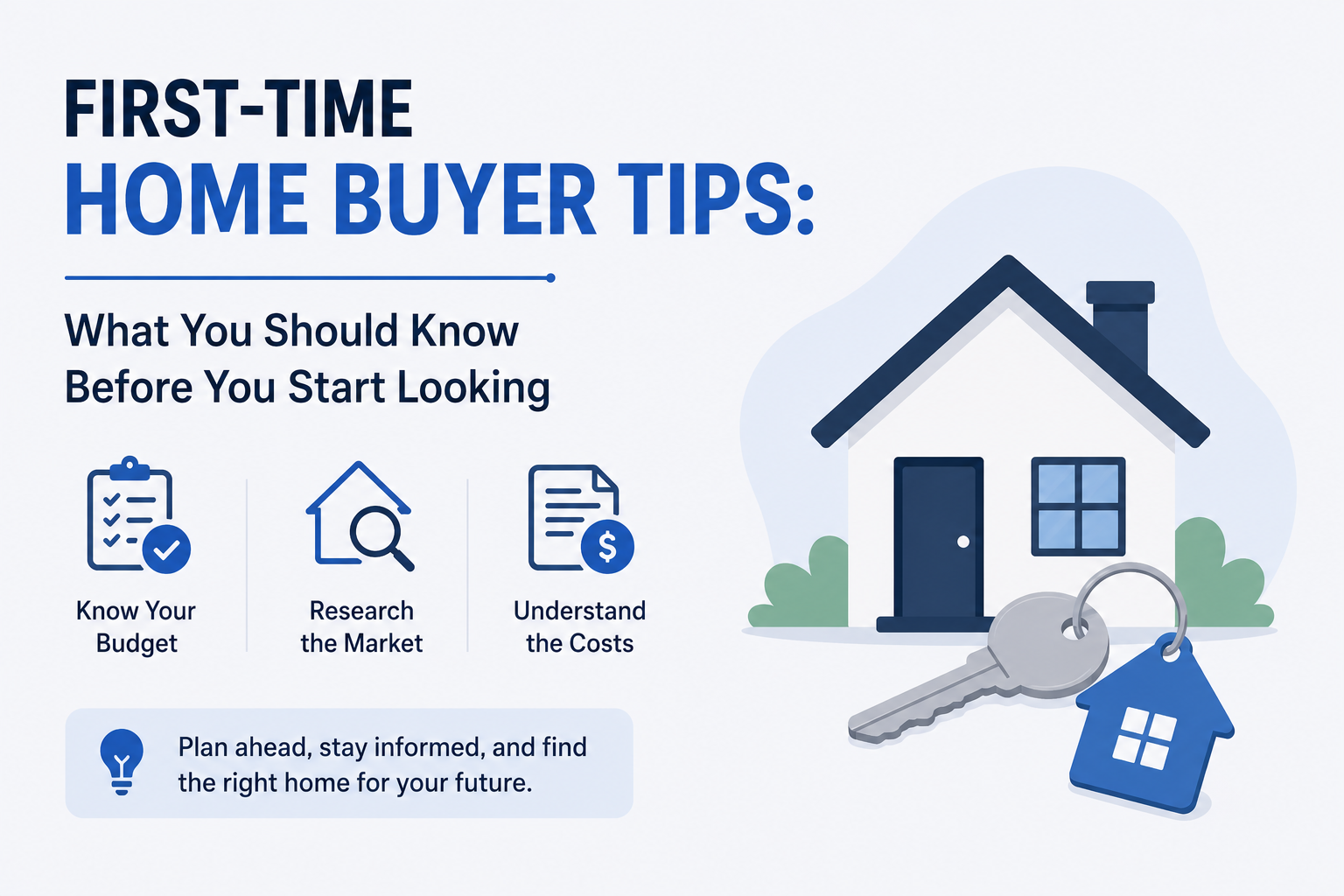
Buying your first home can feel exciting one minute and completely overwhelming the next. That is normal. You are making a major financial commitment while trying to understand mortgage terms, compare neighborhoods, judge the condition of a property, and picture your future, sometimes all in the same afternoon.
The process becomes much more manageable when you take it one decision at a time. You do not need to know everything on day one. You need a clear sense of what comes next, what deserves your attention, and when to slow down and ask questions.
Start With Your Real Budget, Not the Maximum Loan Amount
A lender may approve you for a certain loan amount, but that does not necessarily mean you should spend every dollar of it.
Your comfortable housing budget should leave room for the rest of your life. Think about groceries, car payments, childcare, travel, savings, medical expenses, hobbies, and the occasional repair that shows up at the worst possible time. A mortgage payment that looks manageable on paper can feel very different once property taxes, homeowners insurance, mortgage insurance, and homeowners association dues are included.
So, before you tour homes, decide what monthly payment will let you sleep well at night. That number may be lower than your maximum approval, and honestly, that is often a wise place to be.
Learn the Mortgage Basics Before Comparing Offers
You do not need to become a mortgage expert, but knowing a few basic terms will help you make better decisions.
Pay attention to the loan term, interest rate, annual percentage rate, estimated monthly payment, closing costs, and whether the rate is fixed or adjustable. A shorter loan term may reduce the total interest you pay, but it usually comes with a higher monthly payment. A longer term may feel easier month to month, though you could pay more interest over time.
The interest rate matters, of course, but it is not the only number worth comparing. Fees can vary from one lender to another, which is why the annual percentage rate and total closing costs deserve a close look too.
Review Your Credit Before a Lender Does
Your credit history helps lenders determine whether you qualify and what loan terms may be available to you. Check your credit reports early enough to spot incorrect balances, unfamiliar accounts, or late payments that may have been reported by mistake.
This is also a good time to avoid taking on new debt. Financing a car, opening a credit card, or increasing your existing balances could affect your debt-to-income ratio or credit profile. Even after you receive a preapproval, your lender may review your finances again before closing.
Well, that new furniture set may look perfect for the house you hope to buy, but it is usually better to leave the credit card alone until the keys are officially yours.
Save for More Than the Down Payment
The down payment gets most of the attention, but it is only one part of the cash you may need.
You should also prepare for closing costs, prepaid taxes, homeowners insurance, moving expenses, utility deposits, immediate repairs, and small purchases that add up as soon as you move in. Curtains, locks, lawn equipment, appliances, and basic tools can make the first few weeks surprisingly expensive.
You may not need a 20% down payment. Certain conventional programs allow qualified buyers to put down as little as 3%, while FHA-insured financing may permit a down payment as low as 3.5%. Eligible VA and USDA borrowers may have access to options that require no down payment. Each program has its own credit, income, property, occupancy, and underwriting requirements.
Try to keep some savings available after closing. Draining every account to purchase the home can leave you vulnerable when the water heater fails or the air conditioner needs attention.
Explore Home Buyer Assistance Programs
First-time buyers often assume down payment assistance programs are reserved for people with extremely low incomes. That is not always the case.
Depending on where you live, you may find state, county, city, nonprofit, or housing finance agency programs that help with down payments or closing costs. Some assistance comes as a grant. Some come as a second mortgage that may be deferred or forgiven after you meet certain conditions. Other programs must eventually be repaid.
Eligibility may depend on your income, the home’s location, the purchase price, the loan program, or whether you complete a home buyer education course. Ask your mortgage professional to explain both the benefit and the long-term obligation. “Assistance” does not always mean free money, so you should know exactly what you are accepting.
Get Preapproved Before You Fall in Love With a House
Browsing listings is harmless. Scheduling showings without understanding your financing can be risky.
A mortgage preapproval gives you a clearer picture of the loan amount and payment range you may qualify for. The lender will generally review financial information such as your income, assets, debts, and credit history.
A preapproval is not a guarantee that the final loan will close. The home still needs to meet program requirements; your information must be verified, and your financial situation should remain stable. Still, a solid preapproval can help you search within a realistic range and show sellers that you have taken meaningful steps toward financing.
Compare Loan Programs, Not Just Interest Rates
The right mortgage depends on more than whichever program advertises the lowest rate.
Conventional financing may suit buyers with strong credit or those who want mortgage insurance that can potentially be removed after sufficient equity is established. FHA loans may provide more flexible qualification standards for some borrowers. VA loans offer valuable benefits to eligible service members, veterans, and certain surviving spouses, including the option to purchase without a down payment and without private mortgage insurance. USDA financing may provide a no-down-payment path for qualified buyers purchasing eligible properties in designated rural areas.
Ask how each option affects your upfront cash, monthly payment, mortgage insurance, closing costs, and long-term plans. A loan that saves you money today may not be the best choice five years from now, and vice versa.
Shop More Than One Lender or Use a Broker
You compare prices when buying a car, booking a hotel, or choosing an insurance policy. A mortgage deserves at least that much care.
Request Loan Estimates from multiple lenders using the same general loan scenario. The best way to compare interest rates, annual percentage rates, lender fees, discount points, and estimated cash-to-close is to work with a mortgage broker rather than a direct lender. A mortgage broker has access to diverse loan programs that are otherwise not available from a direct lender.
Service matters too. Notice whether the loan officer answers questions clearly, communicates consistently, and explains risks without pressuring you. A slightly lower quote loses some of its appeal when nobody returns your call during a time-sensitive contract.
Decide What You Truly Need in a Home
It helps to separate your wish list into three categories: what you need, what strongly matters, and what would be nice.
Maybe you genuinely need three bedrooms because you work from home. Perhaps a short commute matters more than an updated kitchen. You may love the idea of a large yard, then realize you do not want to spend every Saturday maintaining it.
Be honest about how you live now, not just how you imagine you might live someday. First-time buyers sometimes pay extra for rooms, features, or acreage they rarely use. At the same time, buying too small can force another move sooner than expected.
A good home does not need to be perfect. It should fit your budget, support your daily life, and avoid problems you cannot reasonably afford to fix.
Work With a Real Estate Agent Who Listens
A capable real estate agent should do more than send listings.
Your agent can help you understand local pricing, evaluate comparable sales, arrange showings, write an offer, explain contract deadlines, and negotiate with the seller. Interview more than one agent if needed. Ask how well they know the neighborhoods you are considering, how they communicate, and how they handle inspection or appraisal issues.
You should also understand how your agent will be compensated. Do not be shy about asking. Buying a home already involves enough money and paperwork; the professional relationships involved in the transaction should be clear from the start.
Look Beyond Paint Colors and Staging
A beautifully staged home can create an immediate emotional pull. That is exactly what staging is meant to do.
Take a breath and look past the furniture. Pay attention to the roof, foundation, drainage, windows, electrical system, plumbing, heating and cooling equipment, and signs of moisture. Visit the area at different times of day when possible. A peaceful street on Sunday morning may feel very different during weekday traffic.
Think about resale value, even if you expect to stay for years. Location, condition, layout, nearby development, school access, taxes, insurance costs, and neighborhood demand can all influence how easily the property may sell later.
Make an Offer You Can Live With
Competitive markets can create pressure to move quickly or bid beyond your comfort zone. Do not let the fear of losing one house push you into a payment you will resent.
Your offer may include the purchase price, earnest money, requested closing date, seller concessions, financing terms, and contingencies. Financing and inspection contingencies can provide important protection if you cannot obtain the loan or the inspection uncovers serious defects. The CFPB recommends considering both financing and inspection contingencies when structuring a purchase contract.
There will be another house. That may not feel comforting when you have already imagined your furniture in the living room, but it is true. Walking away from a bad deal is not failure. Sometimes it is the smartest decision you make.
Never Treat the Inspection as a Formality
An appraisal and a home inspection serve different purposes.
The appraisal provides an independent opinion of the property’s value and is generally required by the lender. The inspection focuses on the home’s physical condition and helps you identify defects, safety concerns, aging systems, and repairs that may be waiting around the corner.
Attend the inspection if you can. Ask questions. Learn where the water shutoff is located, how old the major systems are, and which issues require immediate attention.
No home is flawless, including new construction. The goal is not to receive a report with zero findings. The goal is to understand what you are buying and decide whether the cost and condition still make sense.
Read Your Closing Documents Carefully
As closing approaches, you will receive a Closing Disclosure showing the final loan terms, projected payment, and closing costs. For most covered mortgages, you should receive it at least three business days before closing. Compare it with your latest Loan Estimate and ask about any changes.
Check the interest rate, loan amount, monthly principal and interest, estimated taxes and insurance, cash required at closing, and whether any prepayment penalty or balloon payment applies.
Do not sign a document simply because everyone else at the table seems ready. This is your loan and your responsibility. You are allowed to pause, read, and ask for an explanation.
Be cautious with last-minute wiring instructions as well. Confirm them through a trusted phone number you have already verified, not through an unexpected email.
Prepare for the First Year of Homeownership
Closing day is a milestone, but the financial planning does not stop there.
Build a home maintenance fund and contribute to it regularly. Change the locks, learn where the electrical panel and water shutoff are located, keep copies of your closing documents, and create a simple maintenance schedule. Small tasks, such as replacing filters and cleaning gutters, can prevent much larger expenses later.
Your first home does not need to impress everyone. It needs to work for you. Buy with patience, protect your savings, and choose a payment plan that leaves room for the life you want to live in the house.

 Welcome to CreativeGeneralist.com, your premier destination for authentic news, captivating stories, and insightful posts curated from across the globe. We meticulously select diverse content to inform, entertain, and inspire.