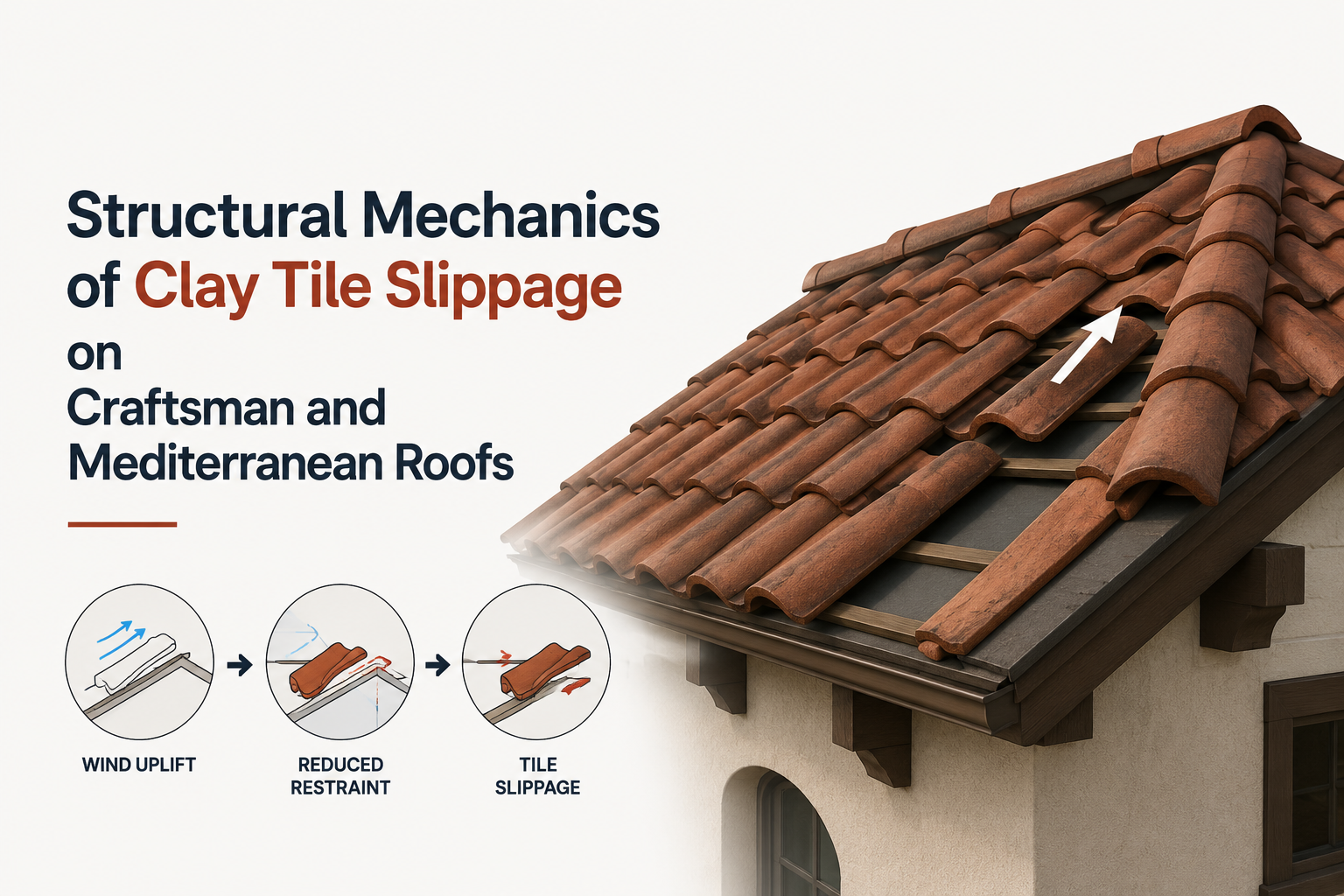
The architectural identity of the San Gabriel Valley is deeply rooted in historic design movements. Throughout neighborhoods featuring distinct early 20th-century housing stock, vintage Spanish Colonial Revival, Mediterranean, and Craftsman-style homes define the visual landscape. A signature characteristic of these classic designs is the extensive use of heavy clay kiln-fired tiles or concrete structural shakes. While these materials offer timeless aesthetic appeal and unmatched fire resistance, they present a unique set of structural engineering challenges as they age.
To the untrained eye, a tile roof appears to be an impenetrable, solid barrier. In reality, clay and concrete tiles function primarily as a water-shedding shedding mechanism, a decorative protective shield over a much more delicate internal waterproofing network. Over decades of exposure to regional weather patterns, these heavy systems are highly prone to a mechanical failure known as tile slippage. Understanding the physics behind why these heavy materials shift, the hidden internal destruction that follows, and the technical methods required to stabilize them is vital for preserving these historic properties.
The Physics of Gravity and Fastener Fatigue
Clay tiles are incredibly heavy building materials, with a standard installation adding anywhere from 600 to 1,000 pounds of dead weight per square (a 100-square-foot area) to a home’s framing. On steep-pitched roofs, which are common in Mediterranean and Spanish Revival architecture, gravity exerts a continuous, downward mechanical pull on every individual tile.
To counteract this constant gravitational pull, traditional installation methods rely on mechanical fasteners, typically copper, galvanized steel, or aluminum nails, driven through pre-drilled holes at the top of the tile into the underlying wooden roof batten strips. Alternatively, in older construction, tiles were frequently held in place purely by heavy mortar beds or wire tie systems.
Over a period of thirty to fifty years, these anchoring mechanisms encounter severe environmental fatigue. Galvanized nails eventually oxidize and rust through due to microscopic amounts of moisture that seep beneath the tiles. Mortar beds dry out, become brittle, and crack under the strain of minor seismic vibrations and local soil settling.
As these mechanical fasteners or mortar bonds disintegrate, the tile loses its physical connection to the roof framework. Driven by gravity and lubricated by seasonal rainstorms, the heavy tiles slowly begin to slide downward, out of their original alignment.
The Domino Effect of Shifted Interlocking Channels
Modern and historic roofing tiles are engineered to work as an interconnected system. They feature specific side-locks and head-locks, interlocking channels that channel water away from the gaps between tiles and direct it down the center of the next lower piece.
When a single tile suffers fastener failure and slips downward even an inch or two, it disrupts the geometric harmony of the entire slope. The interlocking channels pull apart, leaving wide structural gaps between the adjacent tiles.
This shifting triggers a dangerous domino effect. As the slipped tile slides down, it exerts additional physical pressure on the row of tiles directly below it. If those lower tiles are already experiencing fastener fatigue, the added weight can break their remaining bonds, causing multiple rows of tiles to shift, bunch up, or crack simultaneously.
From the ground, this mechanical failure manifests as uneven lines, gaps in the roof hips or valleys, or individual tiles protruding awkwardly over the gutter line.
The Vulnerability of the Exposed Underlayment Skin
The true danger of tile slippage is not the aesthetic disruption or even the risk of a heavy tile falling from the roof; it is the immediate exposure of the underlying waterproofing membrane. Because clay tiles are porous and inherently permit minor amounts of water to pass through their joints, the true workhorse of a tile roof is the asphalt-saturated felt or synthetic underlayment installed directly onto the wooden roof deck.
This underlayment skin is designed to function in a dark, protected environment completely sealed away from the elements. When tiles slip and separate, they expose this sensitive membrane directly to intense Southern California sunlight and UV radiation.
Roofing degrades rapidly when subjected to unfiltered ultraviolet rays. The UV light bakes the volatile oils out of the asphalt-saturated paper, causing it to become brittle, blister, and crack within just a few months of direct exposure.
Once the underlayment splits open, the home loses its primary defense mechanism. The next seasonal rainstorm will drive water directly through the gaps left by the slipped tiles, straight through the cracked underlayment, and into the wooden structural decking below. Because clay tiles absorb and retain moisture, the damp environment beneath a shifted tile section acts as a catalyst for rapid wood rot, structural sag, and toxic mold growth within the attic space.
Technical Remediation and Advanced Stabilization Methods
Resolving a tile slippage issue requires a highly technical approach that goes far beyond simply pushing the shifted tiles back into place and applying topical caulking or roofing cement. Topical patches are temporary fixes that fail to address the root mechanical cause of the structural shifting and will inevitably break apart during the next period of thermal expansion.
A proper structural restoration requires a process known as a tile lift-and-reset. Certified roofing technicians must carefully remove the tiles in the affected area, cataloging and preserving the historic, salvageable clay pieces. The exposed, degraded underlayment must be stripped away entirely so the underlying wood deck can be inspected for hidden dry rot or structural damage.
Once the deck is repaired, a high-performance, self-adhering modified bitumen membrane should be applied. This modern material provides superior elastomeric flexibility and self-seals tightly around any fasteners driven through it.
When reinstalling the tiles, modern engineering standards dictate upgrading the anchoring system. Instead of relying on standard smooth-shank nails, technicians utilize heavy-gauge stainless steel screws or specialized tile wind locks and weather clips. These modern fasteners offer vastly superior pull-out resistance and are entirely immune to the oxidation that destroys older galvanized nails.
The Crucial Role of Regional Roof Diagnostics
Because the architectural styles of historic valley communities present highly specific structural loads and custom geometric transitions, general roofers unfamiliar with traditional tile engineering frequently misdiagnose the underlying causes of movement. Preserving the structural integrity and historical value of these iconic properties requires working with professionals who understand the physics of heavy-material roof systems.
Homeowners must implement proactive maintenance assessments to identify early fastener fatigue and minor tile displacement before a widespread system failure occurs. For residents seeking specialized structural diagnostics and long-term stabilization solutions, partnering with an experienced team like Overhead Roofing Alhambra ensures that your classic property is evaluated with technical precision. By investing in correct mechanical fastening and advanced underlying membranes, you protect the historical character of your home while ensuring its interior remains entirely insulated from the destructive forces of hidden water intrusion.

 Welcome to CreativeGeneralist.com, your premier destination for authentic news, captivating stories, and insightful posts curated from across the globe. We meticulously select diverse content to inform, entertain, and inspire.