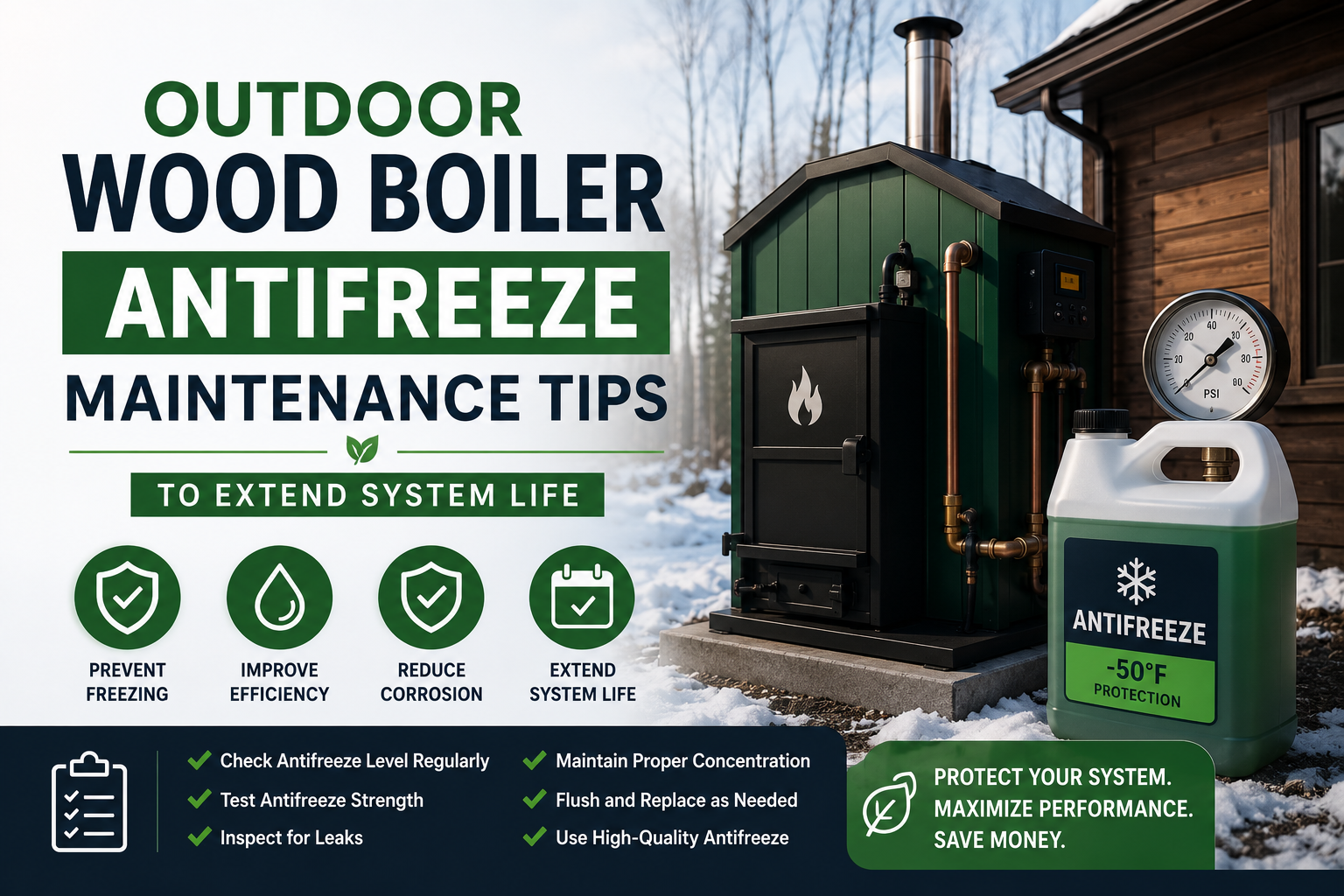
Proper outdoor wood boiler antifreeze maintenance helps protect your outdoor wood boiler from freezing, corrosion, and costly repairs while improving overall system performance. By checking antifreeze quality, using the correct products, and following a regular maintenance schedule, you can significantly extend the life of your heating system.
Why Antifreeze Matters in an Outdoor Wood Boiler
An outdoor wood boiler works by circulating heated water through underground insulated pipes to your home or other buildings. During colder months, low temperatures can place the system at risk if the water is not properly protected.
Antifreeze does much more than prevent freezing. When the correct type is used and maintained properly, it also helps:
- Reduce corrosion inside the boiler and piping
- Protect pumps, valves, and heat exchangers
- Minimize scale buildup
- Improve long term system reliability
- Prevent expensive freeze related damage
However, antifreeze is not required for every outdoor wood boiler. In many installations, properly treated water provides excellent protection. The decision depends on your system design, climate, and manufacturer recommendations.
Choose the Right Type of Antifreeze
Not all antifreeze products are suitable for outdoor wood boilers.
Automotive antifreeze should generally not be used because it contains additives that may not be compatible with boiler systems and can reduce heat transfer efficiency.
Most outdoor boiler manufacturers recommend propylene glycol based boiler antifreeze that is specifically formulated for hydronic heating systems.
Before adding any antifreeze:
- Read the Outdoor Boiler Ownership Guide HERE.
- Verify compatibility with your boiler.
- Follow the recommended concentration.
Using too much antifreeze can reduce heat transfer efficiency, while using too little may leave the system vulnerable to freezing.
Check Antifreeze Concentration Regularly
One of the simplest maintenance tasks is testing antifreeze concentration.
Over time, dilution, leaks, or maintenance work can change the mixture, reducing freeze protection.
You should test the solution:
- Before winter begins
- After adding water
- Following major repairs
- At least once each heating season
Many boiler owners use refractometers or antifreeze test strips to verify freeze protection levels.
Monitor Water Quality
Even when antifreeze is present, water quality remains one of the biggest factors affecting boiler longevity.
Poor water chemistry can lead to:
- Rust
- Internal corrosion
- Mineral deposits
- Reduced heating efficiency
- Premature equipment failure
Regular water testing helps detect problems before they become expensive repairs.
Outdoor Boiler offers free water testing. Routine testing allows you to maintain proper corrosion inhibitor levels and make adjustments before damage occurs.
Inspect the Entire Heating System
Antifreeze maintenance should include a complete system inspection.
Look for:
- Water leaks
- Loose fittings
- Worn hose clamps
- Pump problems
- Air trapped in the system
- Damaged insulation on underground lines
Even a small leak can slowly dilute antifreeze concentration and reduce system protection.
Catching these issues early often prevents larger repairs later.
Use Proper Water Treatment
Antifreeze and water treatment work together to protect your boiler.
Corrosion inhibitors help preserve metal components by reducing oxidation inside the system. Without proper treatment, even antifreeze cannot fully prevent corrosion over many years.
If your system uses treated water, maintain the recommended treatment schedule and monitor inhibitor levels.
Avoid Frequently Adding Fresh Water
Every time fresh water enters the system, additional oxygen and minerals are introduced.
This can increase corrosion and gradually reduce the effectiveness of corrosion inhibitors.
If you notice yourself adding water often, investigate the cause instead of simply topping off the system. Persistent water loss usually indicates a leak that should be repaired.
Flush the System Only When Necessary
Many homeowners assume flushing the system every year is beneficial.
In reality, unnecessary flushing removes protective corrosion inhibitors and may introduce additional contaminants.
Only flush your boiler when recommended by the manufacturer or when significant contamination is present.
After flushing, always restore the proper water treatment and antifreeze concentration.
Follow a Seasonal Maintenance Schedule
A consistent maintenance routine helps avoid unexpected breakdowns.
Before Heating Season
- Test antifreeze concentration.
- Test water quality.
- Inspect pumps and plumbing.
- Check for leaks.
- Verify water treatment levels.
During Heating Season
- Monitor water level.
- Check operating temperature.
- Inspect for unusual noises.
- Watch for pressure changes.
After Heating Season
- Perform a complete inspection.
- Repair any leaks.
- Clean the firebox according to manufacturer recommendations.
- Schedule water testing if needed.
Small maintenance tasks performed regularly often prevent major repairs in the future.
Common Mistakes to Avoid
Many outdoor boiler owners unknowingly shorten system life by making avoidable mistakes.
Some of the most common include:
- Using automotive antifreeze
- Mixing different antifreeze types
- Ignoring annual water testing
- Adding untreated water repeatedly
- Assuming antifreeze never needs testing
- Overlooking small leaks
Avoiding these mistakes helps maintain both efficiency and reliability.
Frequently Asked Questions
How often should outdoor wood boiler antifreeze be tested?
Most manufacturers recommend testing at least once each year before winter. Additional testing is recommended after adding water or performing repairs.
Can I use automotive antifreeze in my outdoor wood boiler?
Generally, no. Outdoor wood boilers typically require propylene glycol products specifically designed for hydronic heating systems. Always follow the manufacturer’s recommendations.
Does antifreeze replace water treatment?
No. Antifreeze helps prevent freezing, while water treatment protects against corrosion and scale buildup. Both play important roles in maintaining system health.
How do I know if my antifreeze needs replacement?
If testing shows reduced freeze protection, contamination, or degraded corrosion protection, replacement may be necessary according to your manufacturer’s maintenance guidelines.
Conclusion
Routine antifreeze maintenance is one of the simplest ways to protect your outdoor wood boiler investment. By using the correct antifreeze, monitoring water quality, inspecting your system regularly, and following seasonal maintenance practices, you can help maximize efficiency while extending the life of your boiler for years to come.
We hope this guide has helped you better understand how proper antifreeze maintenance contributes to a healthier and longer-lasting outdoor wood boiler system. If you have questions about maintenance, water treatment, or your specific setup, we invite you to explore our resources, learn more about our water treatment products, take advantage of our free water testing service, or contact us for additional guidance.

 Welcome to CreativeGeneralist.com, your premier destination for authentic news, captivating stories, and insightful posts curated from across the globe. We meticulously select diverse content to inform, entertain, and inspire.