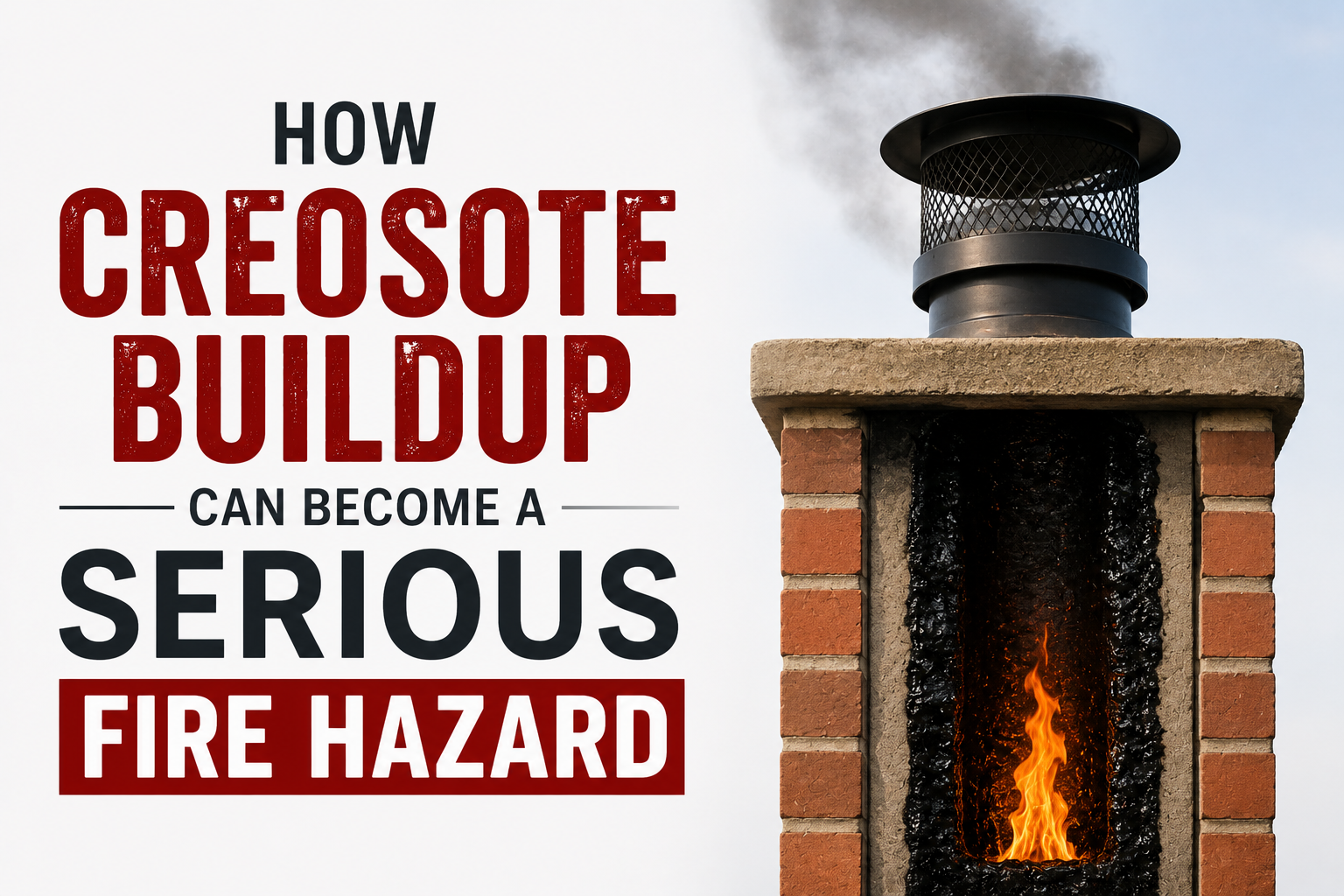
A warm fireplace creates comfort and atmosphere during the colder months, but regular fireplace use also creates byproducts that need proper maintenance. One of the biggest concerns for homeowners is creosote buildup, a highly combustible substance that forms inside chimneys when wood, smoke, and gases do not fully burn away.
Over time, creosote can accumulate along the inside walls of a chimney. If it becomes too thick, it can create a serious fire hazard that puts the home and family at risk. Understanding how creosote develops, why it is dangerous, and how to prevent buildup can help homeowners maintain a safer chimney system.
For properties throughout Greater Boston, Eastern Massachusetts, and Central Massachusetts, regular chimney maintenance is especially important due to seasonal fireplace use and changing weather conditions.
What Is Creosote and How Does It Form?
Creosote is a dark, tar-like substance that forms when wood smoke condenses inside the chimney. Every time a wood-burning fireplace or stove is used, smoke travels through the chimney and leaves behind small amounts of residue.
When the chimney is not cleaned regularly, these deposits continue to build up. Over time, the residue can become thicker, harder, and more difficult to remove.
Several factors can contribute to faster creosote buildup, including burning unseasoned wood, poor chimney ventilation, low burning temperatures, and limited airflow. Even fireplaces that appear to work normally can develop dangerous levels of creosote without visible warning signs.
Why Creosote Buildup Is Dangerous
Creosote is highly flammable, which makes heavy buildup inside a chimney a serious safety concern. When exposed to high temperatures, accumulated creosote can ignite and create a chimney fire.
A chimney fire can spread quickly, especially if cracks or damage already exist within the chimney structure. The intense heat produced during a fire can damage chimney liners, weaken masonry, and potentially spread flames to nearby parts of the home.
Many chimney fires begin with a small ignition of creosote deposits that could have been prevented through regular inspections and cleaning.
Different Levels of Creosote Buildup
Creosote does not always appear the same way. As buildup increases, it becomes more difficult to remove and more dangerous.
The first stage is usually a light, powdery layer that forms inside the chimney. While this stage is easier to clean, it should still be addressed before it develops further.
The second stage creates a thicker, flaky buildup that can restrict airflow and increase fire risk.
The most dangerous stage is heavily hardened creosote that becomes similar to a thick glaze coating the chimney walls. This type of buildup is extremely difficult to remove and creates a significant fire hazard.
Warning Signs of Excessive Creosote
Homeowners may notice several signs that indicate their chimney may have excessive creosote buildup. These warning signs should not be ignored.
Common indicators include:
• Strong smoky odors coming from the fireplace
• Dark, sticky residue inside the chimney
• Reduced fireplace draft
• More smoke entering the room
• Visible black buildup around the fireplace opening
• Frequent difficulty starting or maintaining a fire
If these signs appear, a professional chimney inspection can determine whether cleaning or additional repairs are needed.
How Regular Chimney Cleaning Prevents Fire Risks
Routine chimney cleaning is one of the most effective ways to prevent dangerous creosote accumulation. Professional cleaning removes flammable deposits before they reach hazardous levels.
The frequency of cleaning depends on how often the fireplace is used, the type of wood burned, and the condition of the chimney system. Homes that rely heavily on wood-burning fireplaces may require more frequent maintenance.
A chimney inspection can also identify problems that contribute to creosote buildup, such as ventilation issues, damaged components, or improper burning practices.
For homeowners who notice signs of buildup or want to schedule preventative maintenance, it is important to take action before a small issue becomes a major safety concern. Homeowners can Get in touch to learn more about professional chimney services and maintenance options.
Ways Homeowners Can Reduce Creosote Formation
While professional cleaning is essential, homeowners can also take steps to slow down creosote buildup.
Burning properly seasoned firewood is one of the best ways to reduce smoke and residue. Wet or unseasoned wood creates more smoke and moisture, which increases the chance of creosote formation.
Keeping fires hot and allowing proper airflow can also help reduce condensation inside the chimney. Avoid burning trash, treated wood, or materials that create excessive smoke and harmful deposits.
Using the fireplace correctly and following safe burning practices can make a significant difference in chimney performance.
Why Massachusetts Homeowners Should Prioritize Chimney Safety
Homes throughout Boston, Worcester, Cambridge, Newton, Lowell, Framingham, and surrounding areas experience cold winters that often lead to increased fireplace use. With more frequent fires comes a greater chance of creosote accumulation.
Seasonal weather changes can also affect chimney conditions. Moisture, freezing temperatures, and temperature fluctuations can weaken chimney structures and create additional maintenance needs.
Regular chimney inspections and cleanings help homeowners stay ahead of potential hazards while keeping their fireplaces operating safely.
Protect Your Home From Preventable Chimney Fires
Creosote buildup is one of the most common causes of chimney fires, but it is also one of the most preventable problems. With regular inspections, professional cleanings, and responsible fireplace use, homeowners can significantly reduce the risk of dangerous chimney conditions.
Maintaining a clean chimney helps protect the structure of the home, improves fireplace performance, and provides greater peace of mind during the heating season.
Taking care of creosote buildup before it becomes a serious issue is an important part of responsible home maintenance for any property owner with a wood-burning fireplace.
Key Takeaways
• Creosote forms when wood smoke and gases leave residue inside the chimney.
• Heavy creosote buildup can ignite and create a dangerous chimney fire risk.
• Different stages of creosote require different levels of attention and maintenance.
• Regular chimney cleaning helps prevent hazardous buildup and improves safety.
• Burning dry firewood and maintaining proper airflow can reduce creosote formation.
• Homeowners in Greater Boston and surrounding Massachusetts areas should schedule routine chimney inspections to protect their homes.

 Welcome to CreativeGeneralist.com, your premier destination for authentic news, captivating stories, and insightful posts curated from across the globe. We meticulously select diverse content to inform, entertain, and inspire.