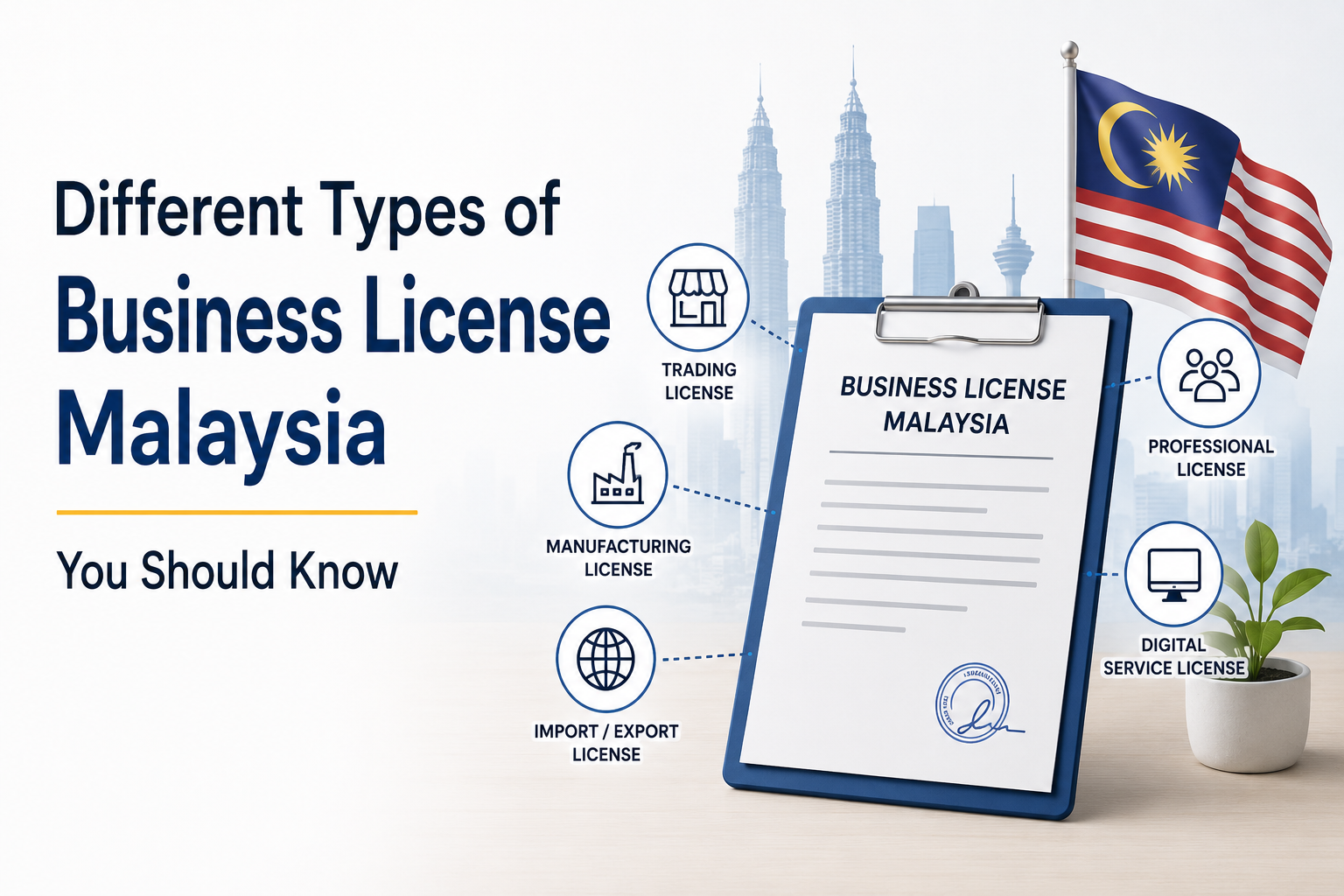
Starting a business involves more than just registering your company. To operate legally, you need to understand the different types of Business License Malaysia available, as each serves a specific purpose depending on your business activity and industry.
Many business owners assume there is only one type of license, but in reality, multiple licenses may be required.
General Business License
This is the most common license issued by local councils (PBT). It allows businesses to operate legally within a specific premises.
Almost all businesses with a physical location will require this license.
A general business license is often the first approval entrepreneurs apply for after company registration. The application process may vary depending on the local authority handling your area, but businesses are usually required to provide company registration documents, tenancy agreements, and identification details. Failing to obtain this license can result in penalties or operational restrictions.
Premise License
A premise license ensures that your business location complies with zoning, safety, and operational requirements. This is especially important for retail shops, offices, and restaurants.
Local councils review whether the chosen location is suitable for the type of business being operated. Authorities may inspect the premises to ensure compliance with health, safety, and building standards before granting approval. Businesses operating in unsuitable locations may face delays or rejection during the licensing process.
Signboard License
If your business uses signage for branding or advertising, you will need a signboard license. This ensures that your signage complies with local council regulations.
The size, design, language, lighting, and placement of signboards are often regulated by municipal authorities. Businesses that display signboards without approval may receive fines or be instructed to remove the signage. Applying for a signboard license helps businesses maintain professional branding while staying compliant with local requirements.
Industry-Specific Licenses
Certain industries require additional licenses. For example:
- Food & beverage businesses
- Manufacturing companies
- Healthcare services
Each industry may have its own regulatory requirements.
For instance, food-related businesses may need health and hygiene approvals, while manufacturing companies could require environmental or safety permits. Healthcare providers often need professional certifications and ministry approvals before operating legally. Businesses involved in finance, education, logistics, or tourism may also need special permits depending on their services.
Because industry regulations can change over time, business owners should regularly check for updated licensing requirements to avoid compliance issues.
Temporary and Specialized Permits
Some businesses may also require temporary or event-based permits. Examples include night market stalls, seasonal events, construction projects, or promotional campaigns. These permits are usually issued for short-term activities and may have strict operational conditions.
Specialized permits may also apply to businesses handling controlled goods, import/export activities, or hazardous materials. Understanding these requirements early can help businesses avoid unnecessary delays.
Why Understanding License Types Matters
Applying for the wrong type of license can lead to delays or rejection. Understanding the correct requirements helps ensure a smooth application process.
Proper licensing also helps businesses build trust with customers, suppliers, and authorities. Operating without the necessary approvals can lead to fines, legal complications, or even forced closure. By understanding which licenses apply to your business, you can reduce risks and focus on growth with confidence.
Conclusion
Knowing the different types of licenses is essential for compliance and smooth operations. Before applying, make sure you understand which Business License Malaysia applies to your business.
Businesses should also stay updated with local council regulations and industry requirements to ensure ongoing compliance. Preparing the correct documentation and understanding the approval process can save time, reduce stress, and help your business operate legally from the start.
👉 Learn more about Business License Malaysia to ensure you choose the correct license type.

 Welcome to CreativeGeneralist.com, your premier destination for authentic news, captivating stories, and insightful posts curated from across the globe. We meticulously select diverse content to inform, entertain, and inspire.