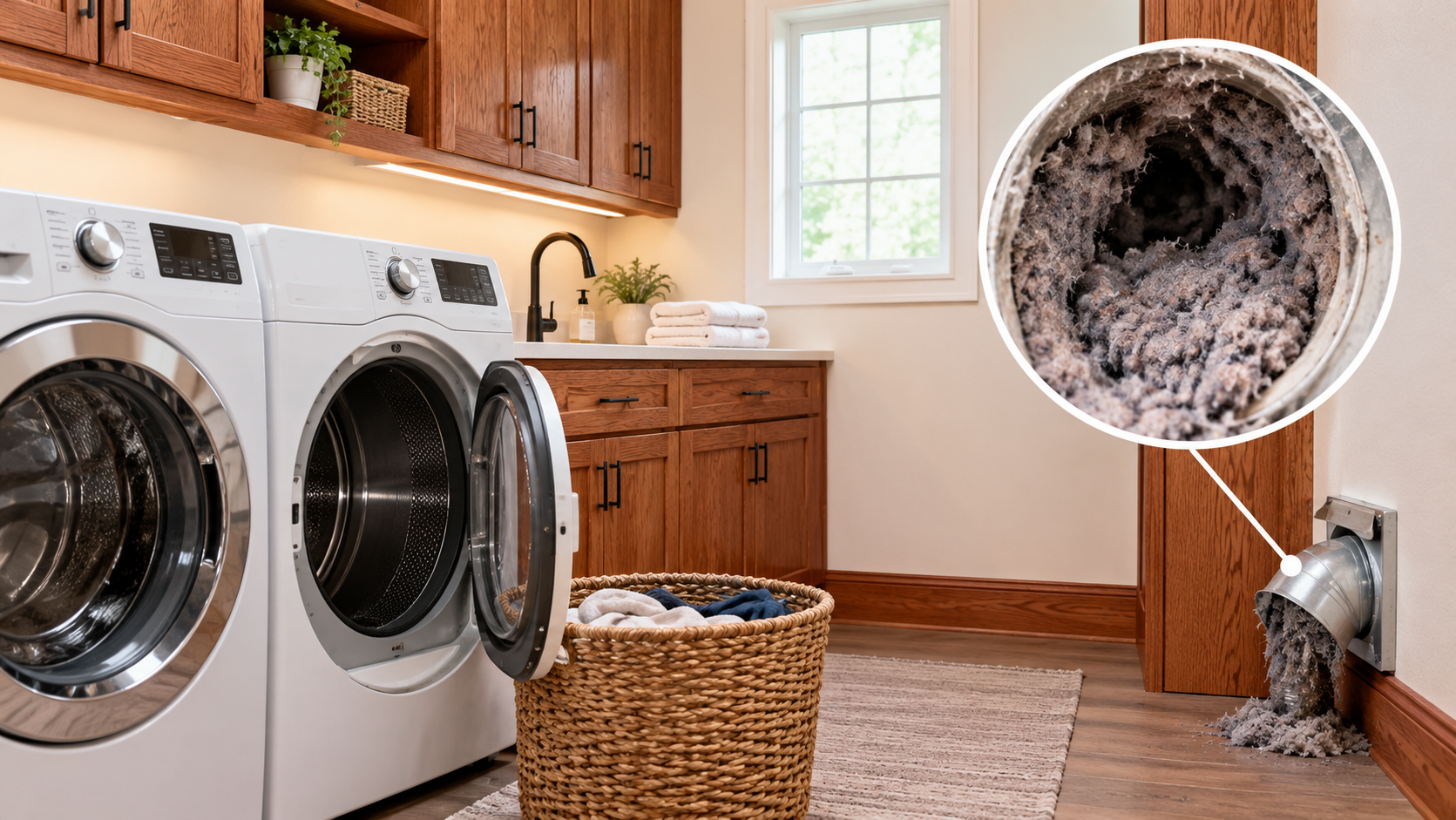
Modern residential laundry facilities provide significant daily convenience, but the appliances within them require ongoing maintenance to operate safely and efficiently. In growing suburban communities like Red Oak, Texas, family households often run multiple loads of laundry each week. While most homeowners regularly clean the removable lint screen inside their clothes dryer, substantial amounts of fine synthetic and cotton fibers bypass primary filtration. Over time, this loose lint accumulates inside internal cabinet cavities and long exhaust duct pathways leading to the outside.
Restricted ventilation in laundry rooms creates secondary home maintenance issues that extend far beyond delayed chore schedules. Trapped lint, combined with humid exhaust air, increases household energy consumption, causes premature appliance failure, and introduces serious fire hazards into residential spaces. Understanding how lint accumulates within dryer exhaust systems allows Red Oak residents to recognize early warning signs and maintain a safe, efficient home.
The Mechanics of Lint Accumulation in Exhaust Channels
Clothes dryers function by tumbling wet fabrics through a stream of heated air. As garments tumble, friction separates tiny fibers from woven threads. The dryer’s internal exhaust fan draws heated air and loose fibers through a primary lint filter before pushing damp air out through an external duct line.
However, primary lint screens only capture a fraction of total loose fibers. High velocity airflow carries ultra-fine particles past filter edges into internal blower housings, flex transitions, and rigid duct walls.
| System Segment | Mechanical Function | Lint Accumulation Risk |
| Primary Lint Screen | Catches large fabric fibers inside the door opening | Allows fine micro-fibers to slip past during high-heat cycles. |
| Internal Blower Housing | Drives air through the internal exhaust assembly | Fibers stick to fan blades and internal motor housings. |
| Transition Duct | Connects the back of the dryer to the wall outlet | Flexible foil or plastic hoses kink easily, creating fiber traps. |
| Main Wall/Attic Vent Line | Directs moist exhaust air to an exterior wall or roof vent | Long pipe runs and elbow bends collect heavy, moist lint mats. |
| Exterior Flap / Louvers | Prevents outdoor pests and backdrafts from entering | Sticky lint prevents damper flaps from opening fully. |
In many North Texas homes, laundry rooms are located on interior walls or second-floor layouts. These floor plans require long exhaust duct runs that travel vertically through attic spaces or horizontally across subfloors. Longer exhaust routes and right-angle elbow turns create additional air resistance, allowing heavy, moisture-laden lint particles to settle along bottom pipe walls before reaching the exterior.
Fire Hazards and Thermal Performance Issues
Lint is composed of extremely flammable cellulose, cotton, and synthetic materials such as polyester and nylon. When lint restricts the flow of hot, moist air through an exhaust line, internal appliance temperatures rise rapidly.
Airflow Blockage –> Heat Retention –> High Operating Temperatures –> Thermal Fuse / Lint Ignition Risk
In electric dryers, elevated temperatures can cause heating elements to glow red-hot, while gas dryers rely on open flame burners. If superheated air cannot escape freely to the outside, settled lint inside the cabinet or duct line can ignite.
| Performance Indicator | Properly Functioning Vent Line | Restricted or Clogged Vent Line |
| Drying Cycle Duration | 35 to 45 minutes per standard load | 60 to 90+ minutes requiring multiple cycles |
| Exterior Cabinet Temperature | Warm to the touch during operation | Hot to the touch, retaining excessive radiant heat |
| Laundry Room Humidity | Neutral, well-ventilated ambient air | Noticeably humid, warm, or muggy room conditions |
| Appliance Thermal Stress | Normal cycling of heating elements | Frequent thermal limit tripping and element burnout |
Beyond combustion risks, restricted ventilation causes excessive mechanical wear. Thermal limit switches continuously trip to prevent overheating, causing heating elements, drive belts, and drum bearings to fail prematurely.
Identifying Signs of Vent Obstruction in Red Oak Homes
Recognizing early indicators of exhaust restriction helps homeowners address ventilation issues before appliance damage or safety hazards occur.
Extended Drying Times
The most common sign of a restricted vent is clothing remaining damp at the end of a standard drying cycle. When air movement is choked, moisture removed from fabrics cannot exit the home, leaving clothes swimming in humid air.
Excessive Heat Retention
If the top or sides of the dryer cabinet feel uncomfortably hot during operation, heat is failing to dissipate through the exhaust hood. Garments may also feature excessively hot metal snaps or zippers at the end of a cycle.
Musty Odors and Humidity
Accumulated lint absorbs moisture from drying clothes. When damp lint sits inside dark ductwork between laundry days, it generates stale, musty smells that transfer onto clean clothing. In addition, moisture leaking through loose duct joints increases humidity in laundry rooms, encouraging localized mold growth on surrounding drywall.
Lint Buildup Around Exterior Vents
Inspecting the exterior exhaust hood on an outer wall or roofline provides immediate visual feedback. If the damper flap is stuck partially open, or if visible lint clings to surrounding brick, siding, or roof shingles, the internal line requires thorough mechanical clearing.
Practical Steps for Maintaining Dryer Vent Safety
Maintaining clear exhaust pathways requires routine visual checks, careful appliance placement, and periodic deep cleaning using specialized tools.
- Clean the Primary Screen After Every Load: Remove collected fibers from the interior screen before starting any drying cycle to maintain maximum baseline airflow.
- Inspect the Rear Transition Hose: Check the duct connecting the dryer to the wall. Replace accordion-style plastic or thin foil transition hoses with rigid or semi-rigid aluminum ducting, which resists crushing and minimizes internal air drag.
- Keep the Exterior Hood Clear: Ensure outdoor exhaust dampers open freely and remain clear of garden mulch, overgrown bushes, or pest nesting materials.
- Avoid Overloading Appliances: Overfilling the dryer drum limits air movement around garments, forcing more loose fibers past the lint trap.
- Schedule Professional Mechanical Cleaning: Standard vacuum attachments cannot reach deep into long wall, floor, or attic duct runs. Scheduling routinedryer vent cleaning in Red Oak ensures that heavy lint deposits, bird nests, and internal pipe obstructions are safely removed using high-pressure air whips and rotary brush systems.
Summary Checklist for Laundry Room Maintenance
To ensure optimal appliance safety and energy efficiency, follow this straightforward maintenance checklist:
- Daily/Per Load: Wipe the lint screen clean and verify that internal drum lighting is working.
- Monthly: Vacuum the slot beneath the lint filter screen using a thinCrevice tool attachment.
- Quarterly: Inspect the transition duct behind the dryer to ensure it is not pinched against the back wall.
- Annually: Check the exterior vent hood for proper flap movement and clear away any accumulated lint or yard debris.
- Every 1–2 Years: Have the entire exhaust line professionally inspected and thoroughly cleaned from appliance to exterior exit.
Protecting Home Safety and Energy Efficiency
A clean dryer vent line is essential for maintaining household safety, operational efficiency, and appliance longevity. By recognizing how lint accumulates inside long exhaust pathways and identifying early warning signs of restriction, homeowners in Red Oak can prevent unnecessary energy waste, avoid costly appliance repairs, and keep their laundry rooms running safely year-round.

 Welcome to CreativeGeneralist.com, your premier destination for authentic news, captivating stories, and insightful posts curated from across the globe. We meticulously select diverse content to inform, entertain, and inspire.