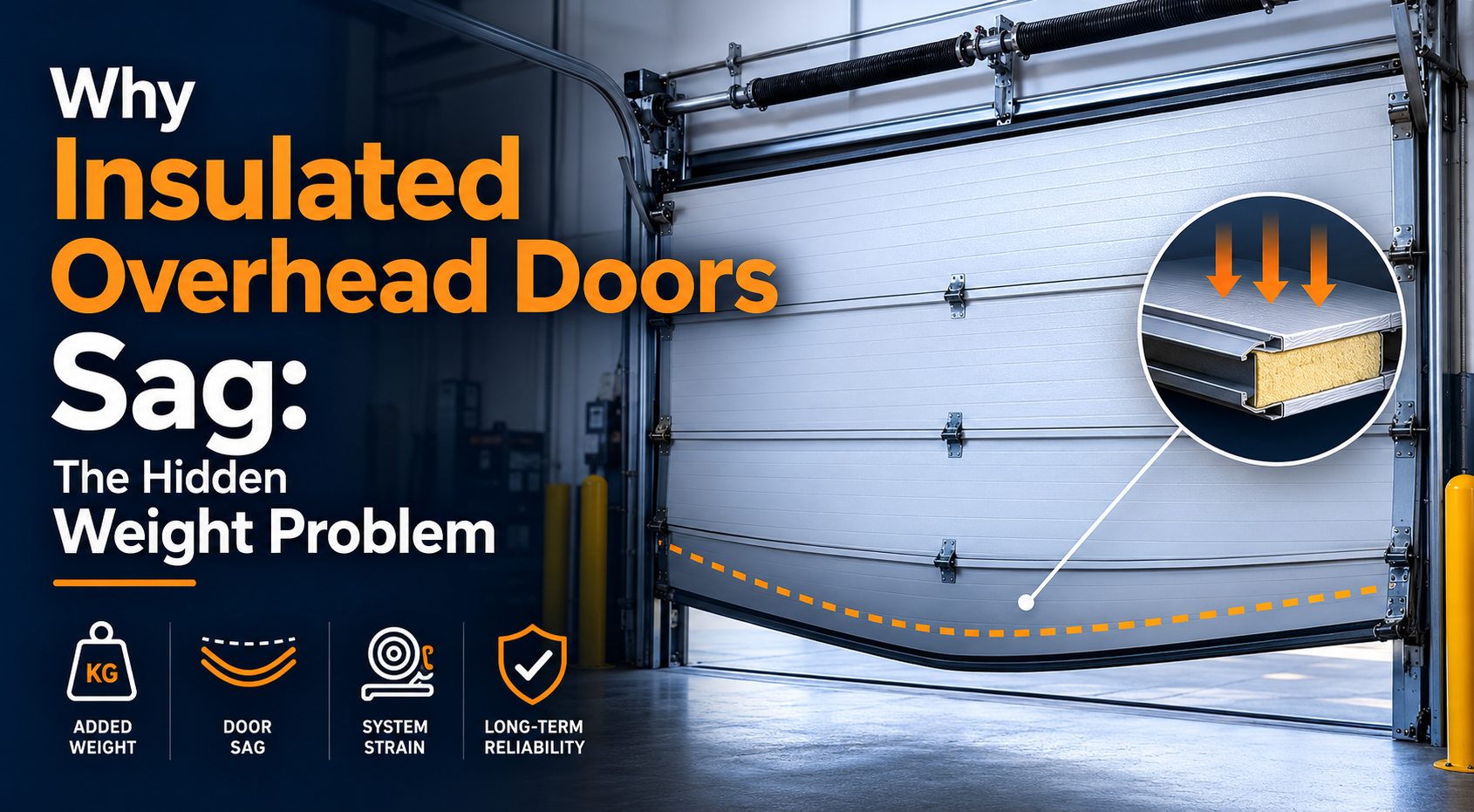
When homeowners choose to upgrade their garage doors, insulation is frequently at the top of the priority list. It is a logical decision, particularly in regions where sub-zero winter temperatures or blistering summer heat waves can turn an unconditioned garage into an energy-drain on the rest of the house. However, adding insulation or opting for a multi-layer insulated door alters the physical parameters of your overhead entry system. While the thermal benefits are immediate, the added mass introduces long-term structural considerations that, if left unaddressed, can cause the door panels to sag and distort over time.
The Structural Stress of Multi-Layer Engineering
Standard uninsulated garage doors are often constructed from a single layer of stamped steel or aluminum. They are lightweight, highly flexible, and require minimal effort to counterbalance. Insulated doors, however, rely on a “sandwich” style construction. This design features a layer of dense polyurethane or polystyrene foam core compressed tightly between an inner and outer steel skin.
While this dense foam core is excellent for deadening sound and regulating thermal transfer, it adds significant, continuous structural weight to the overhead assembly. Over a span of several years, this added mass exerts constant downward gravity on the horizontal center of the door panels, especially when the door is held in the open position parallel to the ceiling.
When an insulated door remains open for hours at a time, such as during weekend cleaning, vehicle maintenance, or lawn care, the middle section of the door lacks vertical support. Gravity pulls down on the center hinges, creating a subtle but permanent bow known as “section sagging.” Once a panel begins to sag, its horizontal tracking profile is altered, forcing the entire door system to undergo uneven mechanical friction every time it transitions through the track radius.
The Chemistry of R-Value and Material Degradation
The effectiveness of garage door insulation is determined by its R-value, which measures the material’s resistance to conductive heat flow. Higher R-values indicate greater insulating power, which usually requires a denser, thicker layer of polyurethane injection. This chemical compound expands inside the steel skin to create a rigid bond.
However, the environment inside a garage is highly volatile. High humidity combined with extreme temperature fluctuations can cause the exterior steel skin to expand at a different rate than the internal foam core. Over time, this thermal cycling can weaken the adhesive bond between the steel and the insulation. This process, known as delamination, allows the foam core to separate from the structural frame.
Once delamination occurs, the inner and outer steel skins lose their unified structural rigidity. The door panel is no longer a solid, load-bearing unit; it becomes susceptible to twisting. As the heavy insulation shifts slightly inside the loose casing, it creates localized pockets of dead weight. This concentrated weight causes the horizontal struts to bend, leading to a visible sag in the center of the panel that prevents the door from forming a tight weather seal against the concrete floor when closed.
Compounding the Strain on Counterbalance Hardware
An insulated door’s weight problem does not affect only the steel panels. The entire mechanical infrastructure of the system, the torsion springs, the steel lift cables, the rollers, and the tracking, is calibrated precisely to the initial dry weight of the door during installation.
If a homeowner attempts to retrofit an existing single-layer door by adding aftermarket insulation panels, the system immediately drops out of physical balance. Standard torsion springs are engineered to support a very specific weight range. Adding even fifteen or twenty pounds of insulation can cause the door to become dangerously bottom-heavy.
When the springs are under-tensioned for the door’s actual weight, the automatic opener must compensate by drawing extra electrical current to pull the door open. This extra workload quickly strips the opener’s internal nylon gears and places severe lateral strain on the top roller brackets.
Even with factory-installed insulated doors, the high-tension springs will fatigue faster than they would on a lightweight door. As the steel coils lose their elasticity, the heavy panels lift unevenly, causing the steel rollers to bind and scrape against the tracking channels. Homeowners can learn more about managing these specialized weight constraints and tracking systems by reviewing the technical resources available at https://www.garagedoorinchicago.com/, which covers the essential mechanics of heavy-duty residential setups.
Reinforcement Struts and Preventive Calibration
Preventing a heavy insulated door from sagging requires structural reinforcement and precise mechanical calibration. It is a process that goes beyond simply tightening the hinge screws or adjusting the force limits on the electronic opener.
The primary defense against panel sagging is the installation of horizontal reinforcement struts. These long, U-shaped steel bars run the entire width of the garage door panels, acting as structural splines that resist the downward pull of gravity. On heavy, insulated multi-layer doors, installing multiple struts across the top and center sections provides the structural rigidity necessary to prevent the panels from bowing when the door is parked overhead.
Additionally, the counterbalancing spring assembly must be periodically adjusted to account for material settling and spring fatigue. A trained technician uses dedicated winding equipment to calibrate the torsion springs to the exact ounce of the door’s total weight. This accurate tensioning ensures that the door remains completely neutral throughout its travel, eliminating destructive strain on the opener drive train. By combining horizontal structural reinforcing with exact spring calibration, you can enjoy the full energy-saving benefits of an insulated door without compromising its mechanical longevity.

 Welcome to CreativeGeneralist.com, your premier destination for authentic news, captivating stories, and insightful posts curated from across the globe. We meticulously select diverse content to inform, entertain, and inspire.