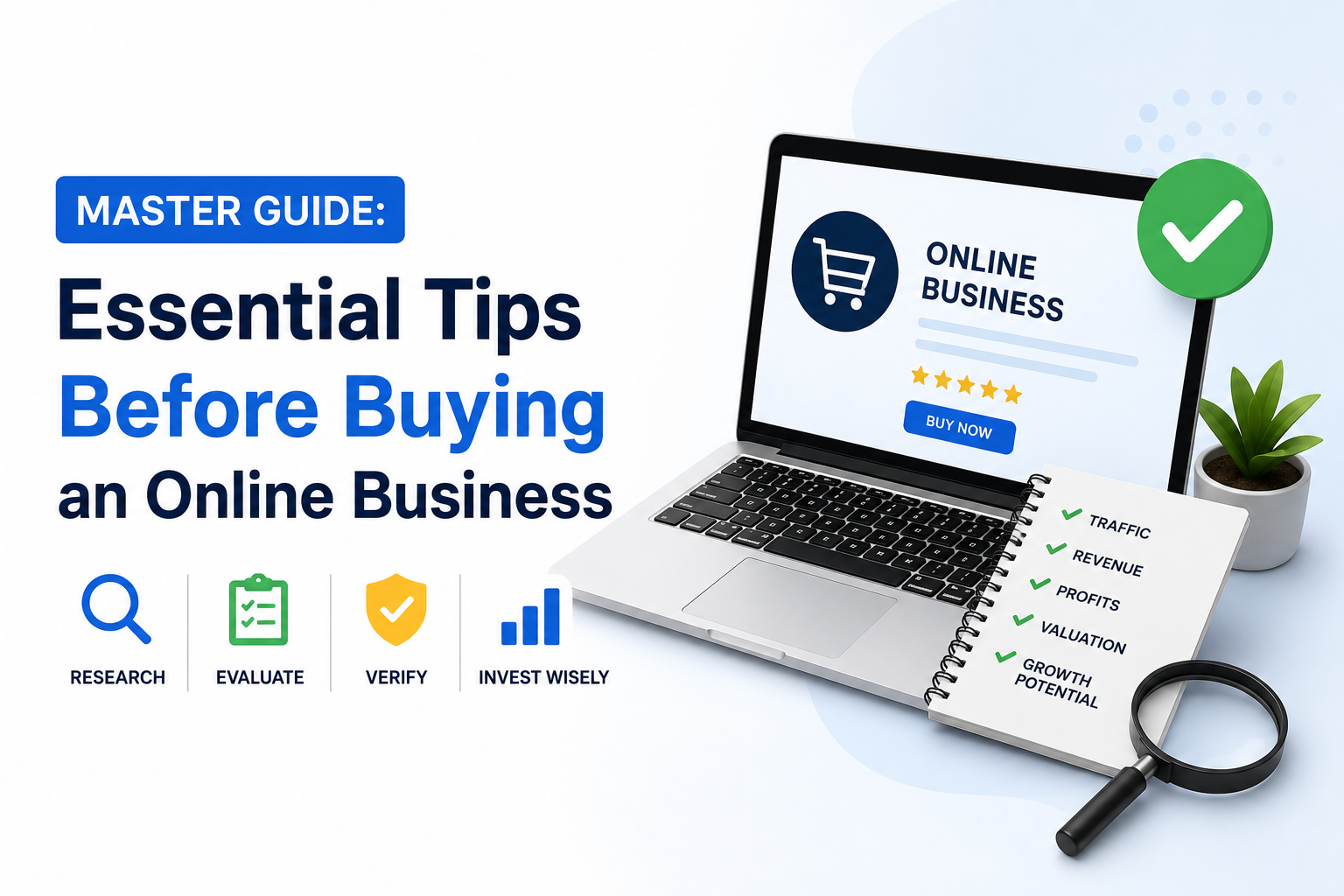
Exploring the Concept of Buying an Online Business
The advent of the digital age has given rise to new modes of entrepreneurship, one notable and increasingly popular avenue being online businesses. The concept of buying an online business is not significantly different from acquiring a brick-and-mortar establishment.
It involves taking ownership of an existing virtual enterprise that operates, generates revenue, and caters to its clientele entirely via internet mediums. Online businesses can take many forms including e-commerce stores that sell products directly to consumers, content-based websites such as blogs and news outlets that generate income via advertising or affiliate marketing, software-as-a-service (SaaS) platforms which offer subscription-based products or services, among others.
Purchasing an established online business has distinct advantages such as bypassing the arduous start-up phase which includes building a website from scratch, finding a target market, and developing brand recognition. Instead, you assume control over a pre-existing operation with established customers and proven cash flow.
The Significance of Online Enterprises in Today’s Economy
In today’s globalized world where digital innovation is rapidly transforming economies worldwide, online businesses have become significant contributors to economic growth. Their ability to transcend geographical limitations offers vast opportunities for trade expansion.
As traditional boundaries dissolve in the virtual marketplace, entrepreneurs can access international markets with relative ease. E-commerce sales globally are projected to reach $4.9 trillion by 2021 according to Statista demonstrating the significant economic impact these businesses can have.
Furthermore, digital enterprises play a vital role in job creation and provide avenues for innovation fostering economic development not just at individual levels but on a broader scale. In developed economies where technology penetration is high and infrastructure exists to support digital transactions seamlessly, online businesses are particularly crucial allowing smaller entrepreneurial ventures opportunities to compete with larger corporations and extend their reach globally, thus democratizing the marketplace.
The Potential Benefits of Owning an Online Business
When considering the potential benefits of owning an online business, the allure of flexible work arrangements often stands out. The freedom to operate from any location, at any time, empowers entrepreneurs to structure their business operations around their lifestyle rather than adjusting their personal commitments around a traditional work schedule. The financial advantages can also be compelling.
Once operational hurdles are bypassed by buying an established venture, businesses can potentially generate significant income. The scalability inherent in many online businesses means there’s often great potential for growth and profit.
Beyond financial gains and flexibility, owning an online business offers the exciting prospects of innovation and personal development. In navigating the ever-evolving digital landscape, entrepreneurs continually learn and adapt thereby improving not only their enterprise but also acquiring invaluable skills applicable in other areas of life.
Unraveling the Tapestry of Online Business Models
E-commerce Stores: The Modern Marketplace
E-commerce stores represent a dynamic segment of online businesses. These virtual storefronts operate by selling physical goods, digital products, or services directly to customers. They could be independent entities or part of larger platforms such as Amazon,
Etsy, or eBay.
The allure of an e-commerce store is its potential for scalability and global reach. With an online store, you can sell products across diverse geographical regions without the operational costs associated with traditional brick-and-mortar shops.
However, it requires a strategic understanding of supply chain management, inventory control, and customer service. Entering into the e-commerce sphere also necessitates a keen understanding of your target market.
A successful online store thrives on product-market fit. Thusly before venturing into this space, conduct thorough market research to identify unique selling propositions that will set your business apart.
Affiliate Marketing Sites: The Art of Promotion
Affiliate marketing sites are another form of online businesses that generate revenue by promoting other companies’ products or services. These sites earn commission through referral traffic; whenever a user clicks on their affiliate link and makes a purchase from the third-party site.
The beauty of affiliate marketing lies in its low-entry barrier and passive income potential. It does not require the handling of physical goods or worry about inventory management—an appealing prospect for aspiring digital entrepreneurs.
However, creating a successful affiliate site requires more than just plastering links everywhere. It involves crafting quality content that provides value to readers while subtly integrating affiliate links within it—thus driving user engagement and boosting conversion rates.
Software as a Service (SaaS): The Digital Revolution
Amidst rapid technological advancements and increasing digital dependence comes the rise of Software as a Service (SaaS) businesses. Herein software solutions are provided to users via a subscription model, typically on a monthly or yearly basis.
Think Salesforce, Slack, or Adobe Creative Cloud. SaaS businesses can offer scalability and high-profit margins due to their recurring revenue model.
Once the initial development work is over and the software is in place, maintaining it incurs relatively lower costs. Yet a SaaS business isn’t without its challenges.
It requires technical skills or the means to hire those who have them. Furthermore, stiff competition in this arena necessitates unique features or superior service that sets your offering apart from others.
Content-based Websites: Monetizing Knowledge
Content-based websites are another type of online business centered around producing engaging content for a specific niche audience. This could span across various mediums—blogs, video (like YouTube), podcasts, online magazines—or a combination of them all.
These sites primarily generate income through advertising revenue (like Google AdSense), sponsored content, or paid memberships for access to exclusive material. They may also diversify earnings by selling related products or services pertaining to their niche.
Success in this sphere hinges on your ability to produce valuable content consistently and grow an engaged audience base over time. SEO knowledge is vital too since visibility on search engines can significantly affect traffic and revenue generation potential.
Subscription Services: A Model of Recurring Revenue
Linger subscription services—an online business model where customers pay recurring fees for access to a product or service. From Netflix and Spotify for entertainment to Dollar Shave Club for personal care products; this model permeates various industry sectors.
Subscription services offer predictable income streams—a coveted attribute in any business venture—and opportunities for customer loyalty due to continuous engagement with subscribers. However, they involve managing logistics if physical goods are part of the package and ensuring consistent value delivery to retain subscribers.
Entering into any of these online business models requires thorough understanding and careful consideration of each’s inherent advantages and challenges. Success depends on market knowledge, strategic planning, and a relentless zeal to learn and adapt in the fast-paced digital realm.
Why Buy an Online Business?
The Lure of Passive Income
One of the primary motivations for buying an online business is the tantalizing prospect of generating passive income. Unlike active income, where earnings are directly tied to your time and efforts, passive income allows you to earn money even while you’re not actively working on your business. Online businesses, especially those that revolve around digital products or services, provide this opportunity.
The allure of continual revenue streams without proportionate ongoing effort cannot be overstated. While it’s important to remember that no business is truly “passive” – all businesses require some level of involvement and maintenance – certain online models require significantly less direct involvement than traditional brick-and-mortar operations.
Affiliate marketing sites and content-based websites relying on ad revenue are examples in this regard; once established they can generate consistent income with minimal daily management. This frees up time for entrepreneurs to focus on expansion strategies, or even start additional ventures.
Flexibility and Freedom Redefined
In a world increasingly championing work-life balance, the flexibility offered by owning an online business is a significant drawcard. These businesses often allow entrepreneurs to set their own hours and work from anywhere with an internet connection – home offices, coffee shops or even while traveling internationally. This freedom extends past physical location or set hours; it also encompasses the operational aspects of the business.
As the owner, you have control over every aspect: from the strategic direction, product portfolio to marketing initiatives. You have creative license over creating your brand’s identity and building its reputation – a freedom seldom found in traditional 9-to-5 jobs or franchises with preset guidelines.
The flexibility inherent in running an online business also opens up opportunities for scaling at your own pace. If your ambition outpaces the growth of your current venture, you have the liberty to branch out into new market segments or diversify your product offerings – all at a pace that suits your personal and financial circumstances.
Lower overhead costs: A game-changer in the business landscape
Starting a traditional business often entails significant upfront costs such as rent, utilities, inventory, and employee salaries. For many aspiring entrepreneurs, these hefty initial expenses can be an insurmountable hurdle.
This is where online businesses shine – they can have considerably lower overhead costs. Online businesses often operate on digital platforms negating the need for physical stores or offices.
They’re typically home-based with minimal equipment requirements – a computer and an internet connection might be all you need to get started. Even as these businesses scale up, many of the additional investments (such as advanced software tools or paid advertising) are generally much less expensive than expanding a physical store footprint.
Furthermore, human resource expenses can be significantly reduced through automation; many repetitive tasks like customer service inquiries and order processing can be handled by sophisticated software solutions. All these factors culminate in lowering overall operational costs translating into higher profit margins – making online businesses an attractive option for modern-day entrepreneurs.
Walking the Tightrope: Respective Risks Involved in Buying an Online Business
The realm of online business, while replete with opportunity, is not without its perils. One such hazard is the existence of scams and fraudulent sellers.
These unscrupulous entities masterfully create appealing but deceptive presentations to sell overpriced or even non-existent businesses. As a potential buyer, you must be meticulous; corroborate every claim, validate all proofs and consider employing professional services to verify the legitimacy of a business.
Another risk pertains to unstable income streams. Running any business has inherent risks due to fluctuations in market conditions and consumer behavior.
An online business may generate substantial revenue one month only to plummet the next, leading to potential financial instability. Therefore, it’s crucial for prospective owners to prepare for such volatility by maintaining an adequate cash reserve and having a robust risk management strategy in place.
The final risk factor relates to rapidly changing technology and market trends. The digital landscape evolves at a pace faster than traditional markets, making it essential for owners of online businesses to continually adapt or face being sidelined by competitors.
Making Your Move: Evaluating the Right Online Business to Buy
Before leaping into purchasing an online business, several factors require careful evaluation starting with your skills, interests, and budget. The best online ventures align with your competencies as well as your passions since running an enterprise that lacks personal interest can prove tedious over time.
Additionally, your financial capability will dictate which businesses are within reach. Next on your checklist should be understanding the chosen business model and its revenue streams – whether they stem from product sales, affiliate marketing or subscription services amongst others.
Make sure you grasp how these revenues are generated before investing. A pivotal part of this assessment involves evaluating website traffic and user engagement metrics.
This information offers a window into the business’s health and sustainability. High user engagement and organic traffic often signal a reputable, well-performing online business.
Being Sherlock: Performing Due Diligence Before Purchase
A crucial step before buying an online business is performing due diligence. Begin by verifying the financial information shared by the seller, including income, expenses, and profit. These details provide insights about profitability and potential financial issues that may impact future operations.
Checking legal aspects such as trademarks, copyrights, patents is equally important to ensure no legal encumbrances are attached to the business. Potential buyers should also evaluate technical aspects like website structure and SEO status to ascertain if any improvements are needed post-purchase.
The Art of Acquisition: Negotiating & Buying an Online Business
To strike a winning deal when buying an online business, you must master negotiation tactics while anchoring your negotiations on solid valuation methods. Remember that the asking price is just a starting point; dissect it based on different valuation methodologies before making your offer.
Part of this process involves using escrow services for secure transactions during purchase. Escrow ensures protection for both buyer and seller in case of any disputes or misunderstandings.
Ensuring smooth transition of ownership is key to maintaining continuity in operations post-purchase. Preparing comprehensive handover plans can help prevent disruption in customer service or workflow during transition periods.
The work doesn’t end once you’ve bought an online business; post-purchase strategies determine your venture’s success rate. Maintaining existing customer relationships should top this list – customers form the lifeblood of any commercial entity so keeping them satisfied is paramount.
An effective entrepreneur continually identifies areas for growth or improvement in their business. Such an approach fosters innovation and productivity while propelling the business toward greater heights.
Keep abreast of industry trends and best practices to remain competitive. The digital landscape is continuously evolving; adaptability is vital for survival and success.
Conclusion
Buying an online business can be a rewarding venture if undertaken with caution and diligence. Understanding the potential risks, carrying out thorough evaluations, exercising careful negotiations, and implementing effective post-purchase strategies can pave the way to success in this digital realm.
As with any endeavor that holds the promise of reward, it’s vital to remember that the key lies in preparation, patience, and adaptability. Indeed, navigating this landscape might be challenging but remember: every great journey begins with a single step!

 Welcome to CreativeGeneralist.com, your premier destination for authentic news, captivating stories, and insightful posts curated from across the globe. We meticulously select diverse content to inform, entertain, and inspire.