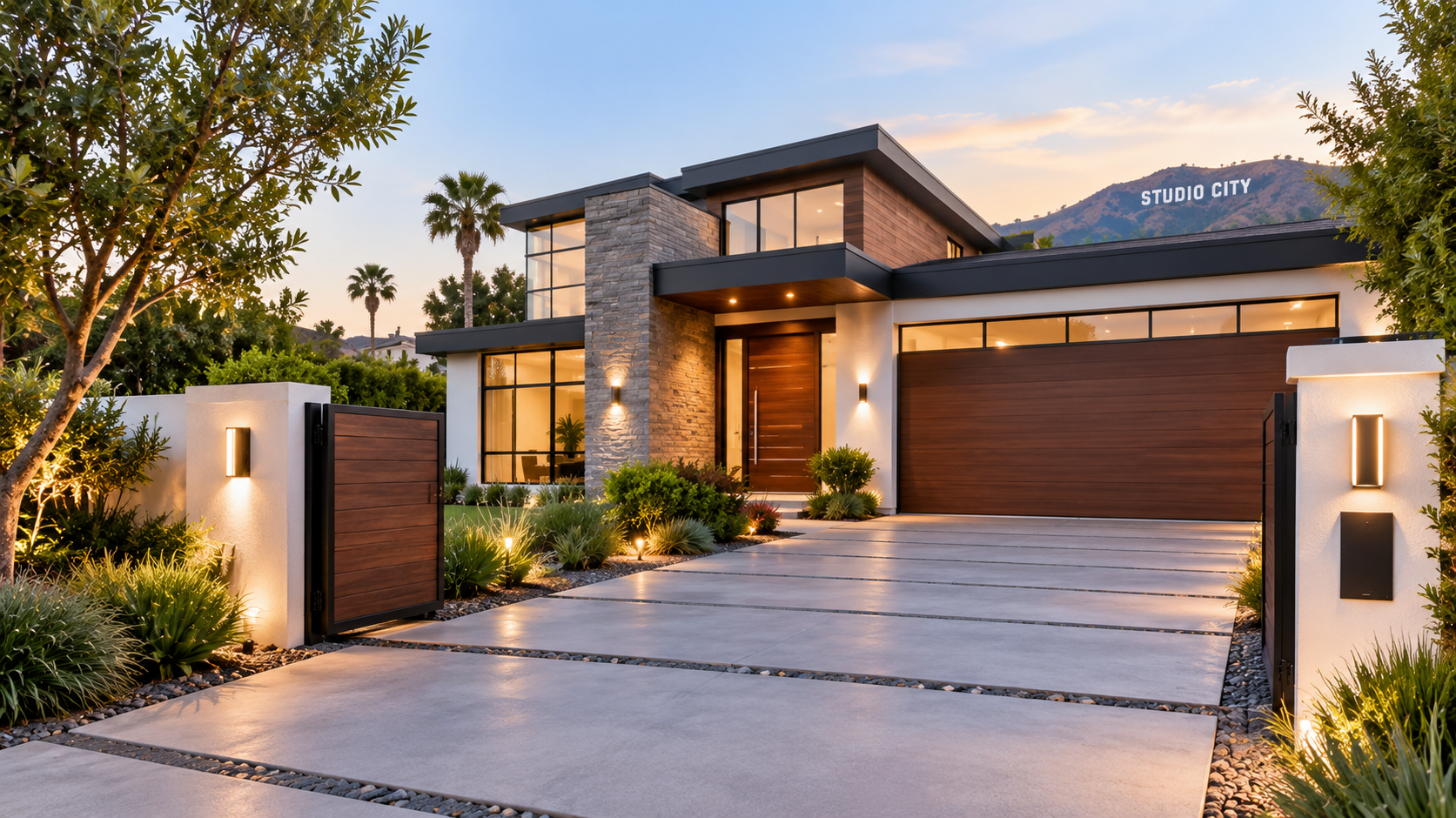
Studio City long ago established itself as one of the San Fernando Valley’s premier residential enclaves, seamlessly blending mid-century modern architectural heritage with contemporary luxury builds and hillside retreats. Across neighborhoods ranging from the silver-screen historic properties in Fryman Canyon to updated suburban ranch homes near Ventura Boulevard, property owners prioritize both privacy and elevated design. As residential architecture in the area evolves, the perimeter driveway entrance has transitioned from a basic functional boundary into a defining architectural statement.
Designing a modern entry system for a Studio City home involves balancing physical security, architectural aesthetics, neighborhood zoning standards, and smart access technology. This guide provides a detailed exploration of how structural metal fabrication, site geometry, and automated mechanics come together to create seamless, high-performance driveway entrances for modern residences.
Architectural Trends in Studio City Driveway Entrances
The architectural character of Studio City is diverse, requiring driveway entrances that reflect specific home styles while offering contemporary security benefits. Rather than relying on generic, off-the-shelf gate packages, modern homeowners favor custom-fabricated systems designed to complement the primary residence’s facade.
Modernist Horizontal Slat Designs
Horizontal slat entrances have become increasingly popular alongside contemporary and mid-century modern renovations. Fabricated from powder-coated steel or aluminum, these designs feature clean, geometric lines that provide varying degrees of privacy based on slat spacing. They offer a minimalist aesthetic while maintaining high structural rigidity across wide driveway spans.
Architectural Iron and Custom Geometric Metalwork
For traditional estates, Spanish Revival homes, or Craftsman properties, custom ironwork remains a timeless choice. Modern fabrication techniques allow for intricate geometric patterns, laser-cut steel privacy panels, and clean vertical picket designs that integrate naturally with surrounding stone masonry columns or stucco retaining walls.
Composite and Hybrid Metal Framing
Combining heavy steel frameworks with wood-look composite infill panels offers the warm, natural appearance of timber alongside the structural longevity of metal. Steel perimeter framing prevents the sagging, twisting, and warping that traditional solid wood gates experience when exposed to direct sunlight and regional temperature changes.
Engineering Considerations for Driveway Geometry and Topography
Studio City features varied terrain, from flat grid streets north of Ventura Boulevard to steep, winding hillsides south of the boulevard. Site geometry dictates the mechanical design and operating style of the entry gate.
Swing Gates vs. Sliding Gate Mechanisms
Choosing between a swinging or sliding entry depends primarily on available driveway space and ground slope:
- Dual Swing Systems: Ideal for wider, flat driveways where there is sufficient depth for gate leaves to arc inward or outward. Swinging gates offer a classic architectural opening motion but require clear ground clearance throughout their swing path.
- Sliding and Telescoping Systems: Necessary for properties with short driveway depth or steep incline approaches. A sliding gate moves parallel to a fence line or perimeter wall, preserving driveway space. In locations with narrow side clearance, telescoping slide gates use nested overlapping panels to open fully within a compact lateral footprint.
- Cantilever Gate Configurations: On hilltops or uneven ground where installing a continuous surface track is impractical, cantilever systems suspend the gate leaf above the pavement, eliminating track maintenance and debris accumulation.
Managing Grade Transitions and Uphill Approaches
Driveways angled sharply upward from the street level present significant mechanical obstacles for inward-swinging gates. Standard swing hardware can cause the bottom of the gate to drag against the pavement as it opens. To resolve this, specialized rising hinges lift the gate panels slightly as they swing, or the system can be engineered as an outward-swinging or cantilever sliding gate that completely bypasses ground contact.
Integrating Modern Access Control Electronics
A physical gate structure represents only half of a modern entrance. Integrating responsive automation hardware and smart access controls transforms the barrier into a practical, secure entry workflow for daily household management.
Hydraulic and Mechanical Automation Drives
Automated gate operators must be sized correctly based on the weight, length, and daily duty cycles of the gate leaves. Heavy structural steel gates subjected to wind loads require high-torque hydraulic operators rather than light-duty mechanical screw drives. Hydraulic systems offer smooth acceleration and deceleration, quiet operation, and exceptional durability under frequent daily use.
High-Definition Video Intercoms and Mobile Credentialing
Contemporary entrance automation relies heavily on IP-based video telephone entry terminals and mobile application integration. High-definition cameras equipped with infrared night vision allow residents to verify visitors visually from a touchscreen monitor or smartphone before granting access. Real-time push notifications alert homeowners when deliveries arrive, allowing them to open the gate remotely for courier drops without leaving packages exposed on the street.
Multi-User Access Management
Managing access credentials for family members, domestic staff, service contractors, and guests requires flexible authentication options. Modern access control panels allow property owners to issue distinct digital keycodes, mobile app credentials, or RFID vehicle tags. System administrators can assign time-restricted codes that operate only during specific hours, revoking permissions automatically when service agreements conclude.
For homeowners reviewing perimeter upgrades in the neighborhood, choosing experienced craftsmen specializing inDriveway Gates Studio City ensures that heavy-duty metal fabrication, motorized operators, and digital access control electronics are installed to precise structural standards and local municipal requirements.
Installing a driveway entrance requires compliance with municipal building codes, local zoning regulations, and fire department access mandates. Working within these legal guidelines during the initial planning phase prevents costly design revisions and installation delays.
- Property Line Setbacks: Local regulations often dictate how far back from the public curb or sidewalk an entry gate must be positioned. Adequate setback depth ensures that arriving vehicles can pull completely out of traffic lanes while waiting for the gate to open.
- Maximum Height Regulations: Residential gate heights are restricted by municipal codes based on location, typically allowing higher structures along side or rear boundaries than along front property lines.
- Emergency Access Compliance: Automated gate installations must feature standardized rapid-entry overrides, such as Knox key switches or radio receiver triggers, allowing fire department personnel and emergency medical responders to enter without delay.
- Safety Sensor Calibration: To comply with UL 325 safety standards, automated systems must include dual-safety features, such as photoelectric photo-eye sensors and reversing edge sensors, preventing the gate from closing onto vehicles, pets, or pedestrians.
Establishing a Maintenance Strategy for Lasting Performance
To preserve both appearance and mechanical reliability, automated entrance systems require routine preventive maintenance. Environmental factors such as dust, UV radiation, and seasonal thermal shifts can cause mechanical friction or electrical wear over time.
Regular maintenance should include lubricating hinges, guide rollers, drive chains, and bearing assemblies with high-grade lubricants every six months. Control boxes should be inspected periodically for moisture seal integrity and insect activity, both of which can damage delicate circuit boards. Additionally, testing safety sensors, battery backup systems, and emergency manual release mechanisms regularly ensures the entrance remains fully operational during unexpected power outages.
Elevating Property Value and Perimeter Security
A thoughtfully engineered driveway entrance represents an investment that enhances curb appeal, architectural cohesion, and daily peace of mind for Studio City homeowners. By combining structural metal fabrication, site-specific engineering, modern access automation, and strict code compliance, residential properties gain a secure, reliable perimeter threshold built to deliver flawless performance for years to come.

 Welcome to CreativeGeneralist.com, your premier destination for authentic news, captivating stories, and insightful posts curated from across the globe. We meticulously select diverse content to inform, entertain, and inspire.